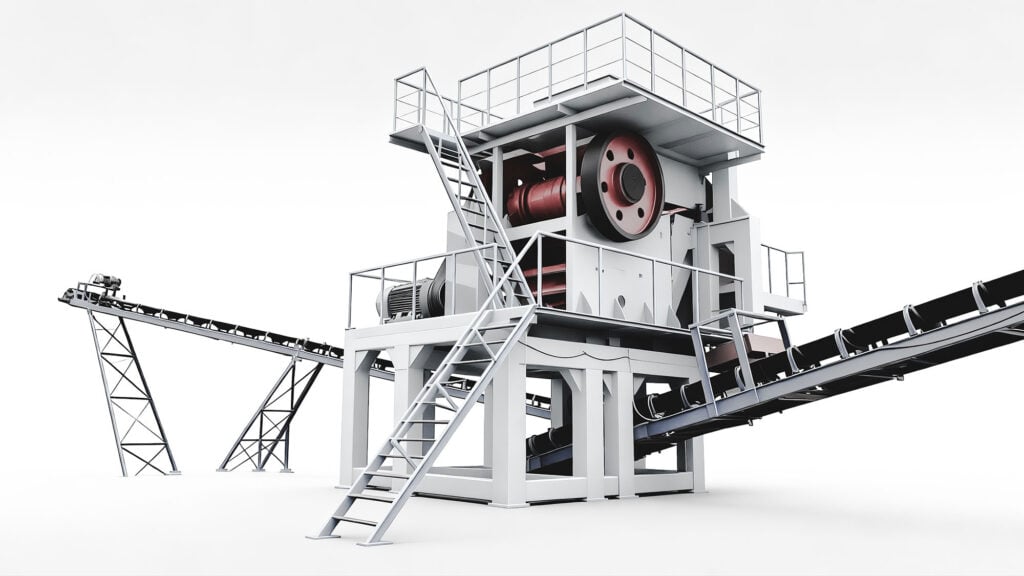
Heavy-Duty Primary Crushing Solutions
Jaw Crusher
Delivering ZME Solutions that combine extreme compressive force with high durability. Specifically engineered to crush hard and abrasive rocks with maximum productivity at mine and quarry sites.
What Is
Jaw Crusher?
A Jaw Crusher is one of the primary crushing equipments designed for primary to secondary crushing processes. Key advantages include a high reduction ratio, uniform product size, simple structure, reliable operation, easy maintenance, and economical operating costs.
Although long established, the Jaw Crusher remains irreplaceable to this day and continues to be the primary choice for first-stage (primary) crushing. As a technologically mature piece of equipment, the Jaw Crusher is theoretically capable of crushing materials with compressive strengths up to 350 MPa. This range covers approximately 80–90% of rock types available on the market, making its applications exceptionally broad across various industrial sectors.
Technically, this machine is engineered to process various types of large ores and materials with feed sizes ranging from 125 mm to 1,200 mm. The discharge opening setting can be adjusted from 10 mm to 350 mm, offering exceptional flexibility to achieve target particle sizes during primary production stages.
Therefore, in practical applications, the Jaw Crusher is typically deployed as the first-stage (primary) crushing equipment in a production line. To ensure operational stability and extend the service life of wear components, it is highly recommended to process rocks with compressive strengths not exceeding 250 MPa during primary crushing to achieve optimal efficiency.
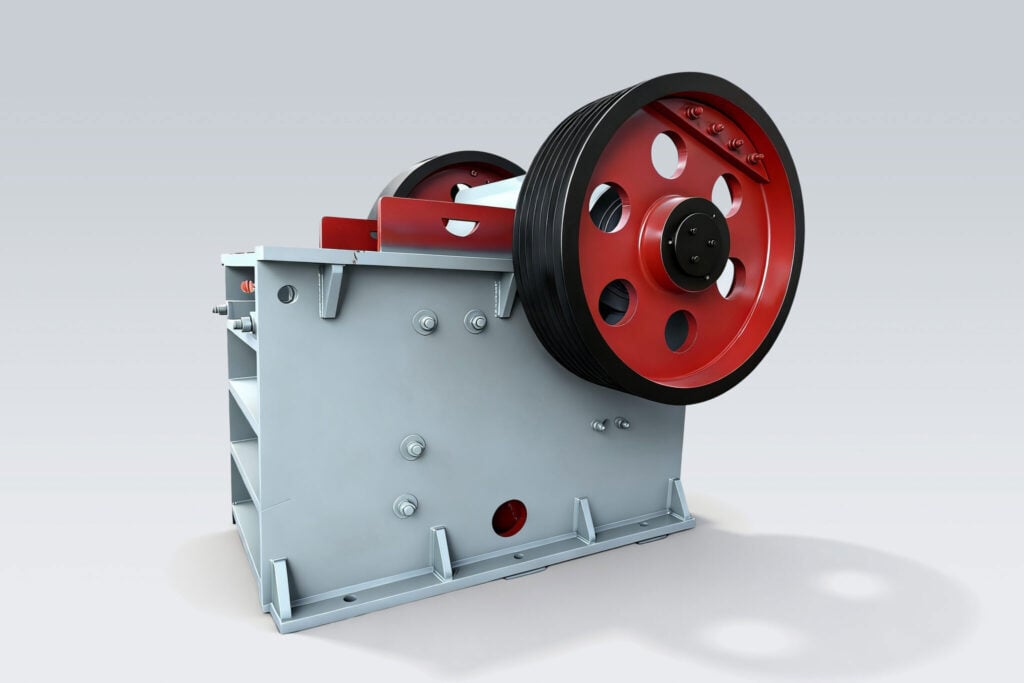
ZME Expert Tip: “Selecting the right Jaw Crusher isn’t just about capacity—it’s about matching the Jaw Plate material to the abrasiveness of your rock. ZME provides a wide selection of jaw plate alloys to maximize wear life under extreme mining conditions.”
Two Series of
ZME Jaw Crusher
ZME offers two types of Jaw Crushers engineered for distinct operational requirements: the PE Series for standard primary crushing, and the C Series for high-capacity, heavy-duty applications. Key differences lie in structural design, crushing chamber geometry, jaw stroke length, and the CSS (Closed Side Setting) adjustment system.
C-Series Jaw Crusher
Specially engineered for large-scale mining operations and the most demanding working conditions.
Maximum Feed Size: 430–1,200 mm.
Closed Side Setting (CSS) Range: 40–300 mm.
Key Advantages: Features a long jaw stroke and a deeper crushing chamber. Optimized jaw kinematics ensure higher throughput capacity, lower power consumption per ton, and exceptional operational stability when processing extremely hard ores.
PE-Series Jaw Crusher
A reliable solution for mineral and rock crushing in general industrial applications.
Maximum Feed Size: 125–1,200 mm.
Closed Side Setting (CSS) Range: 60–350 mm.
Key Advantages: Ideal for medium to hard materials. This series is the most popular choice for primary crushing in aggregate production lines, medium-scale mining, and road construction due to its simple structure and low maintenance costs.
How It
Works?
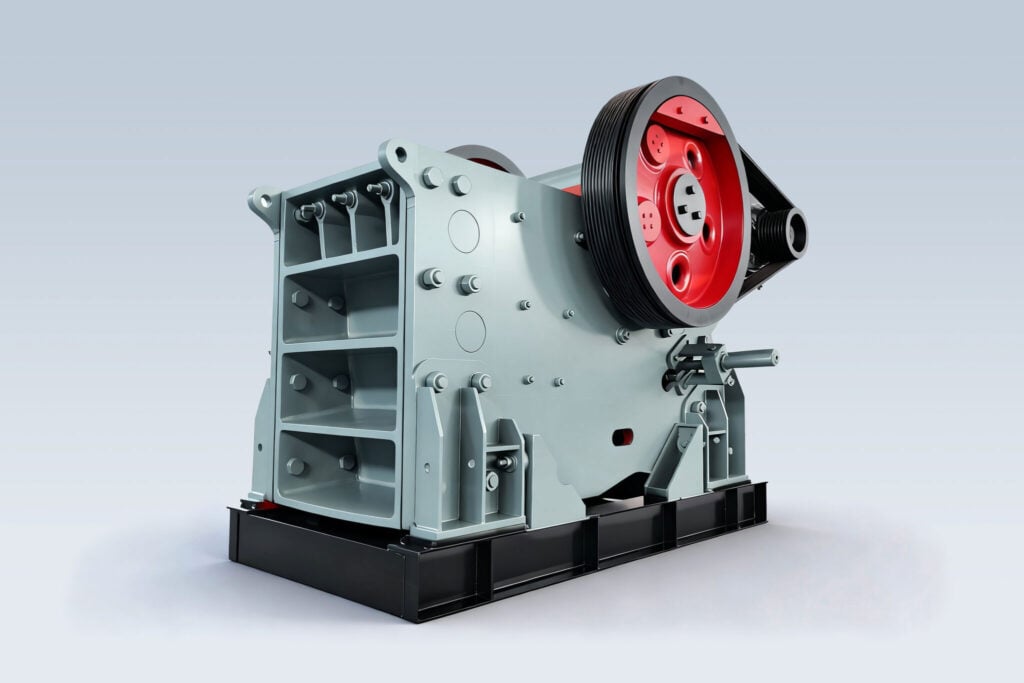
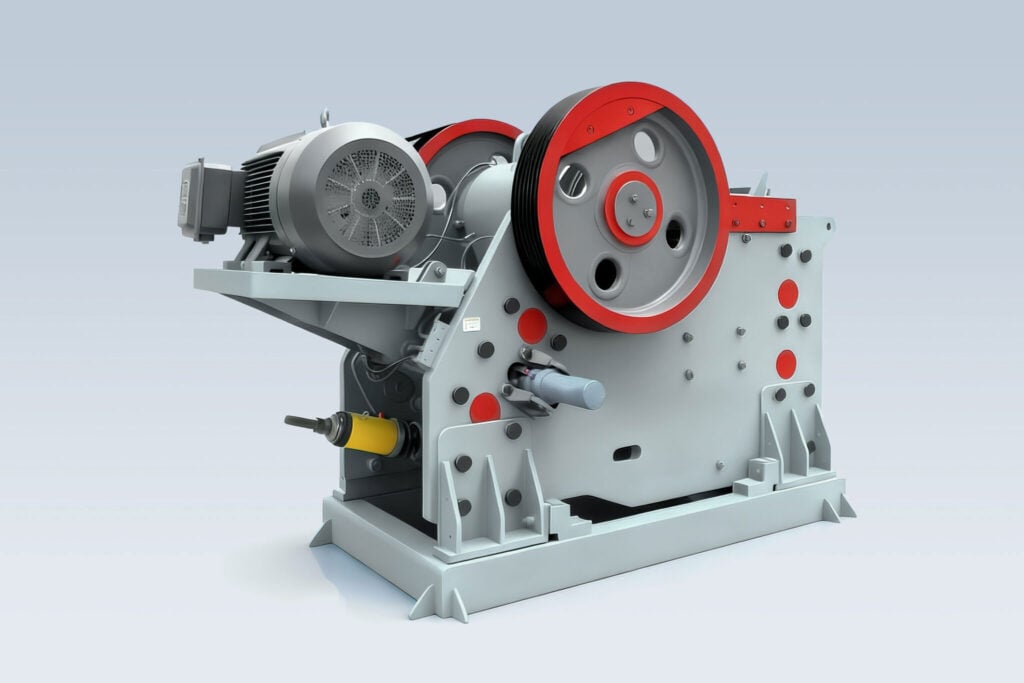
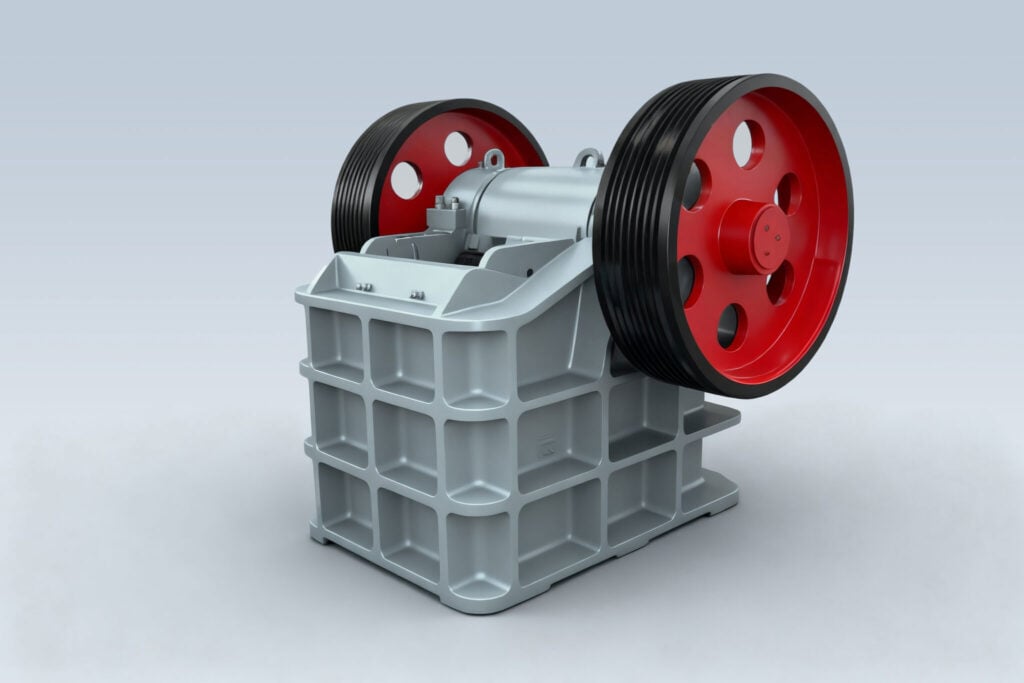
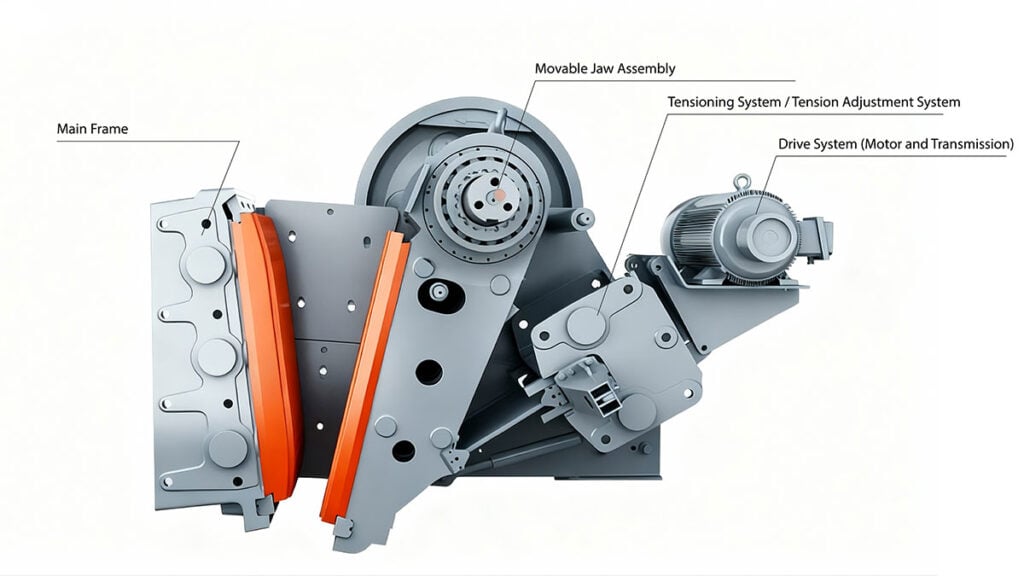
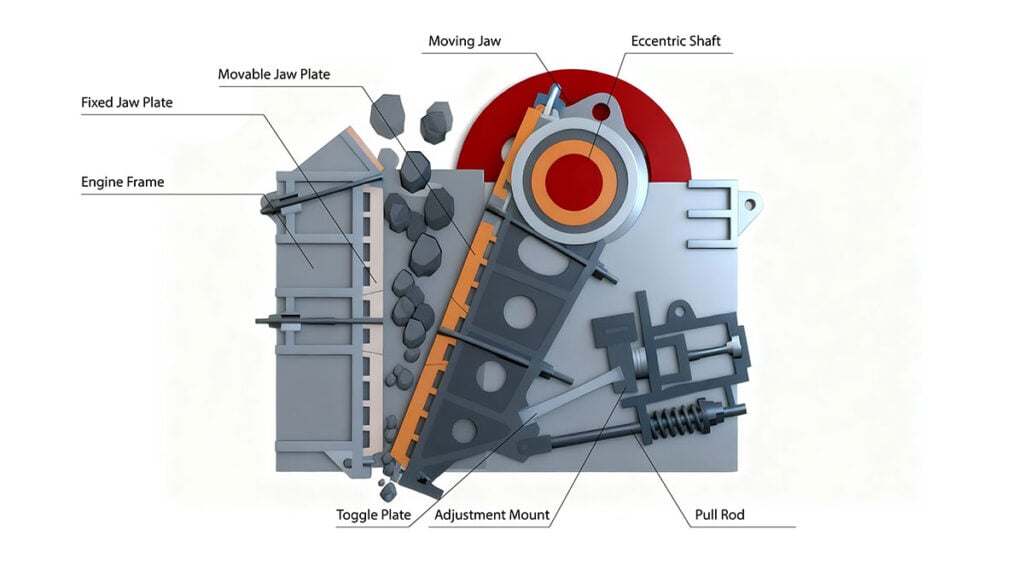
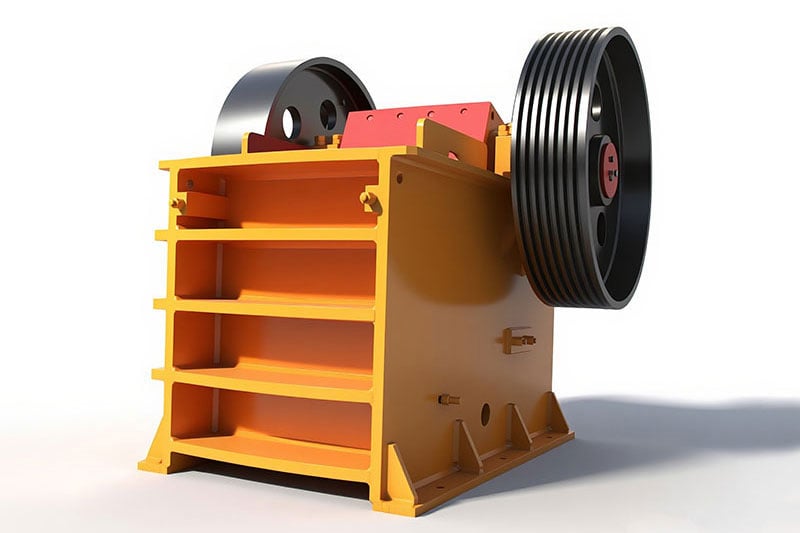
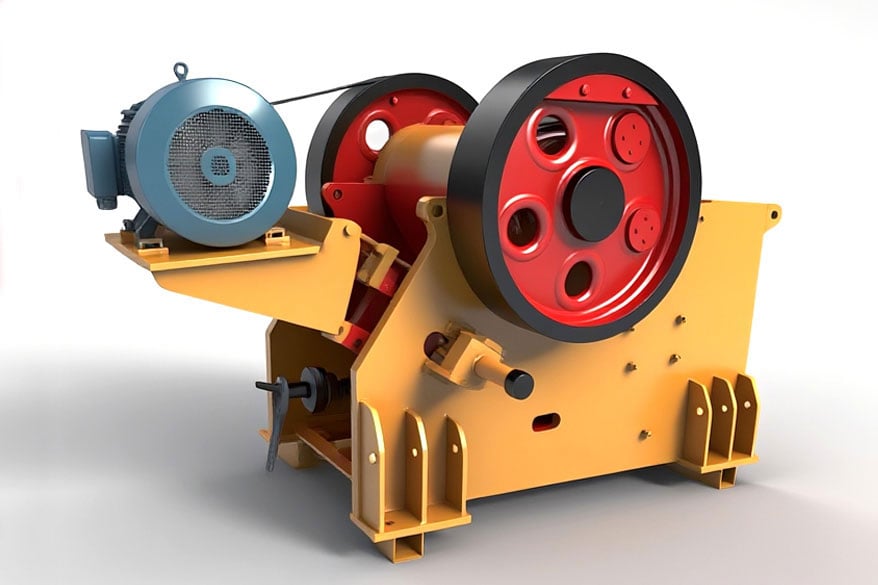
Structurally, the ZME Jaw Crusher consists of main components including a fixed jaw plate, a swing jaw plate, a heavy-duty frame, side liners, as well as an adjustment system and an eccentric shaft. The crushing chamber is precisely formed by the convergence of the swing jaw and fixed jaw, where materials are crushed through mechanical force generated by the relative motion of the two jaws.
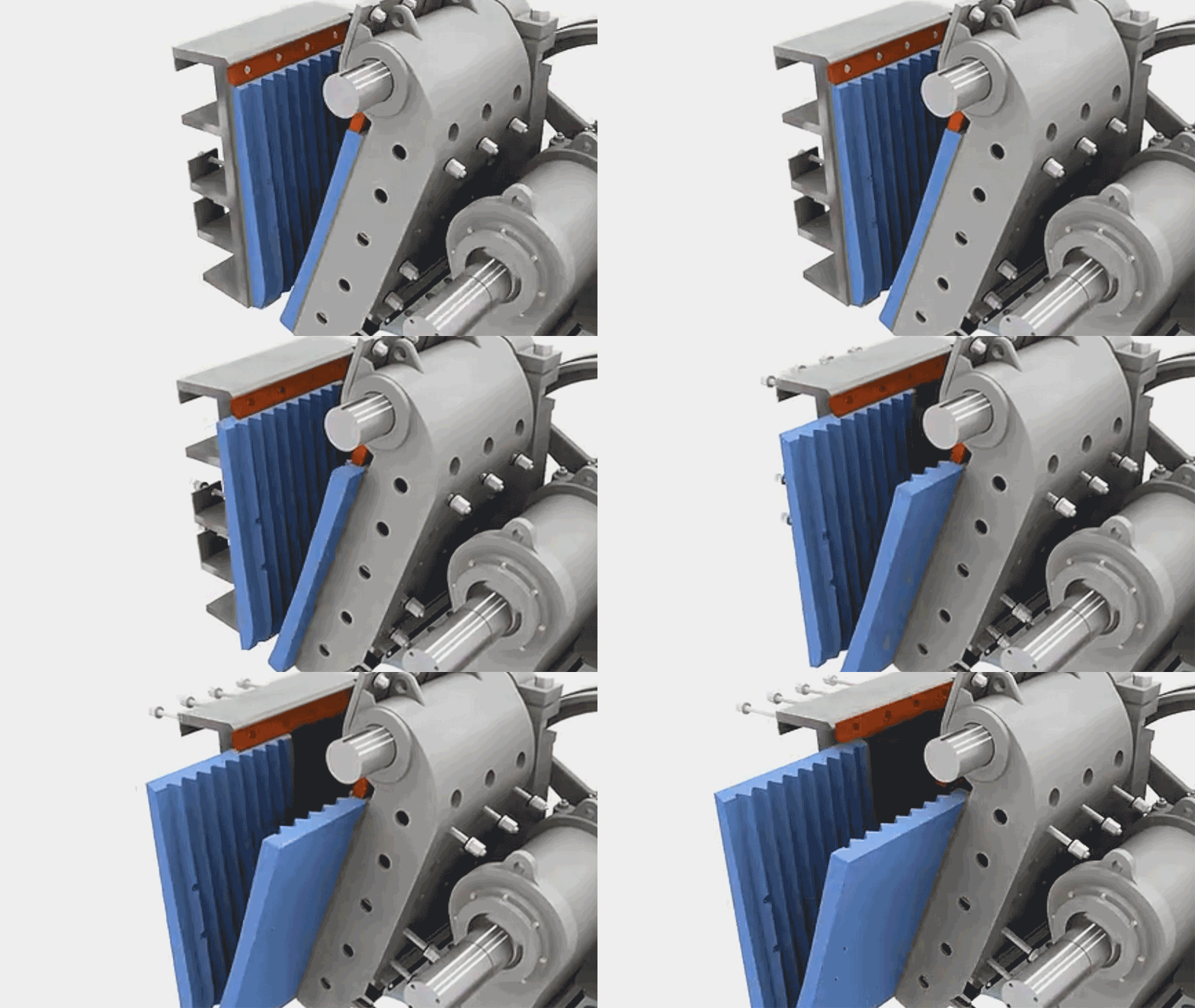
During operation, the drive motor rotates the pulley and eccentric shaft, causing the swing jaw on the ZME Jaw Crusher to periodically swing toward and away from the fixed jaw. The material inside the crushing chamber undergoes a simultaneous combination of compressive, splitting, and bending forces. The rock size is gradually reduced as it moves downward under gravity, eventually discharging through the bottom opening.
As an advanced swing-and-compress type crushing equipment, the ZME Jaw Crusher optimizes the periodic motion of the jaw to ensure a stable and efficient crushing process. Featuring a simplified structural design paired with reliable performance, the ZME machine achieves continuous crushing and material discharge, making it the primary solution for first-stage crushing in mining and aggregate processing industries worldwide.
Applications of
Jaw Crusher
The ZME Jaw Crusher is engineered as the most robust solution for the Primary Crushing stage at mining and quarry sites. It focuses on delivering massive throughput capacity and consistent discharge size to create ideal feed conditions for secondary crushing equipment, such as Cone Crushers or Impact Crushers. By efficiently processing large boulders in the initial stage, it directly reduces the workload and wear rates on downstream processing units.
In mining operations demanding continuous performance, the ZME Jaw Crusher stands as the top choice due to its ability to handle virtually all types of high-hardness rocks. Its applications are extensive, ranging from Aggregate Production Lines (such as basalt, andesite, and river stone) to Ore Mining (iron ore, copper, gold, and quartz) as well as large-scale construction waste recycling.
Application Advantages of ZME PE and C Series: Through a kinematically optimized jaw motion trajectory, these series guarantee high productivity even when handling highly abrasive materials. At quarry sites producing materials for road and building construction, precise Closed Side Setting (CSS) adjustment ensures consistent material gradation, minimizes downtime, and optimizes operational expenditure per ton (OPEX).
Scope of Mining & Quarry Materials:
Hard & Abrasive Rocks: Basalt, Andesite, Granite, Quartz, and River Stone.
Metallic Ores: Iron Ore, Copper Ore, Nickel, and Gold.
Industrial Minerals: Limestone, Gypsum, Shale, and Coal.
ZME Technical Note: For highly abrasive mining materials, ZME’s jaw plate design utilizes reinforced high-manganese steel alloys, ensuring extended component wear life even under continuous full-load operating conditions.
Top 3 Important Factors for
ZME Jaw Crusher
The ZME Jaw Crusher adopts an optimized deep-cavity crushing chamber design, significantly boosting primary crushing efficiency. Featuring a fine-tuned swing jaw speed and an innovative curved jaw plate profile, this machine delivers massive production capacity, highly effective reduction ratios, and stable performance for hard rock crushing applications in mining environments.
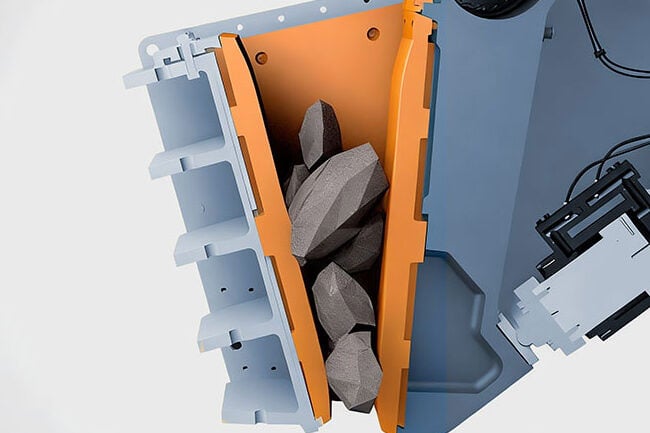
High Capacity and Energy Efficiency
This Jaw Crusher adopts a deep and sharp “V“-shaped crushing chamber design, effectively eliminating dead zones and ensuring smooth material flow without blockage. This structure significantly expands the effective crushing area, enabling high production capacity with more uniform product gradation..
- Feed Optimization: The wide feed opening design and new-type toothed side plates enlarge the working area of the jaw plates, boosting productivity when handling massive rock boulders.
- Maximum Capacity: Maximum feed size up to 1,200 mm, making it an ideal solution for large-scale primary crushing applications in andesite quarries and metal ore mines.
- Cost Efficiency: The V-shaped crushing chamber maximizes kinetic energy utilization, delivering high throughput with significantly lower power consumption per ton.
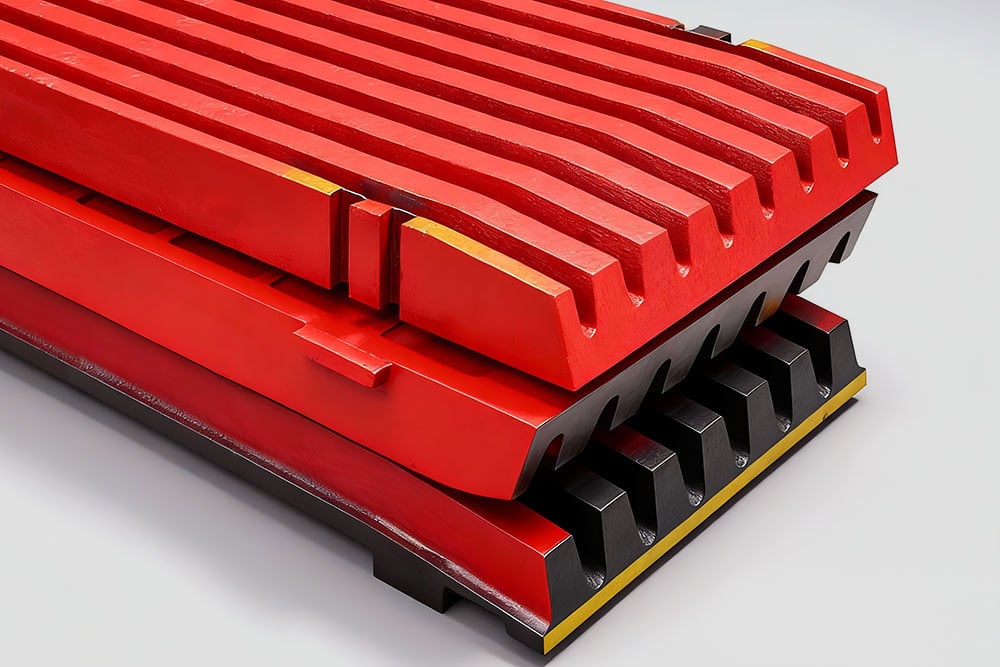
Advanced Manufacturing and High Durability
Manufactured to modern industrial standards utilizing high-quality cast steel and premium wear-resistant materials, the ZME Jaw Crusher features a rigid frame structure built for an extended service life. Critical components are engineered for heavy-duty operations, reducing spare part replacement frequency and minimizing total maintenance costs.
- Extreme Durability: Premium material selection combined with mature heat treatment technology enhances structural resistance against impact loads, directly lowering operating costs throughout the equipment lifecycle.
- High Precision: Precision-machined components manufactured via advanced CNC equipment guarantee mechanical stability, even under extreme workload conditions and continuous 24/7 operations.
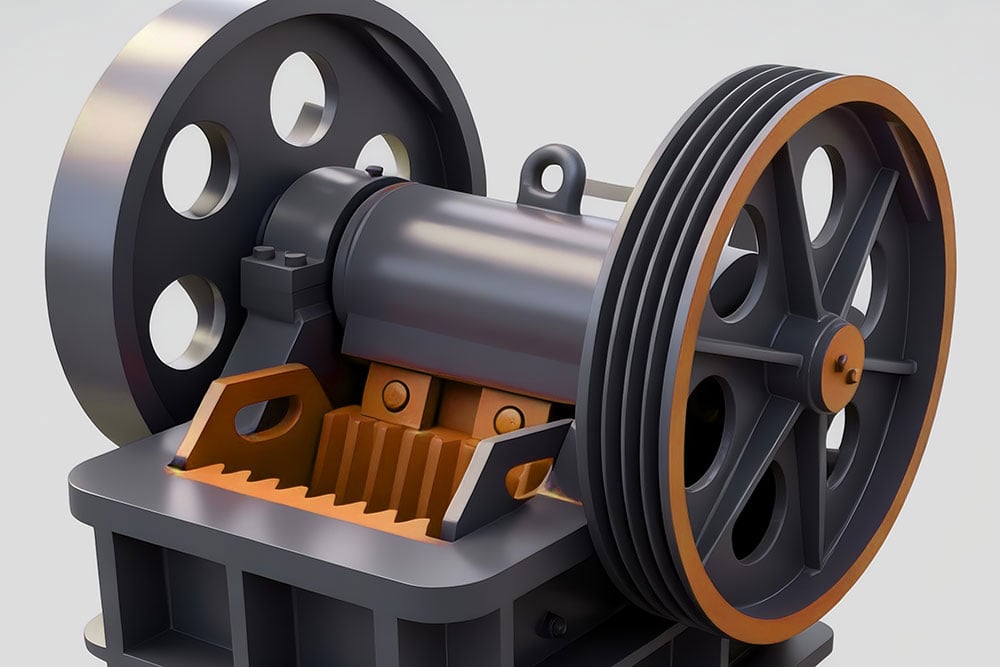
Stable Operation and Reliable Performance
This Jaw Crusher is equipped with a precisely engineered and dynamically balanced flywheel system, ensuring smooth rotation, low vibration, and stable operation. Its rational internal design simplifies maintenance access, thereby minimizing downtime.
- Operational Reliability: An optimized structural design enhances field mechanical reliability, reduces manual intervention, and guarantees smooth operation across the entire aggregate and mineral processing line.
- Production Continuity: Stable crushing performance yields consistent output sizing, creating ideal feed conditions for secondary crushing equipment such as Cone Crushers or Impact Crushers.
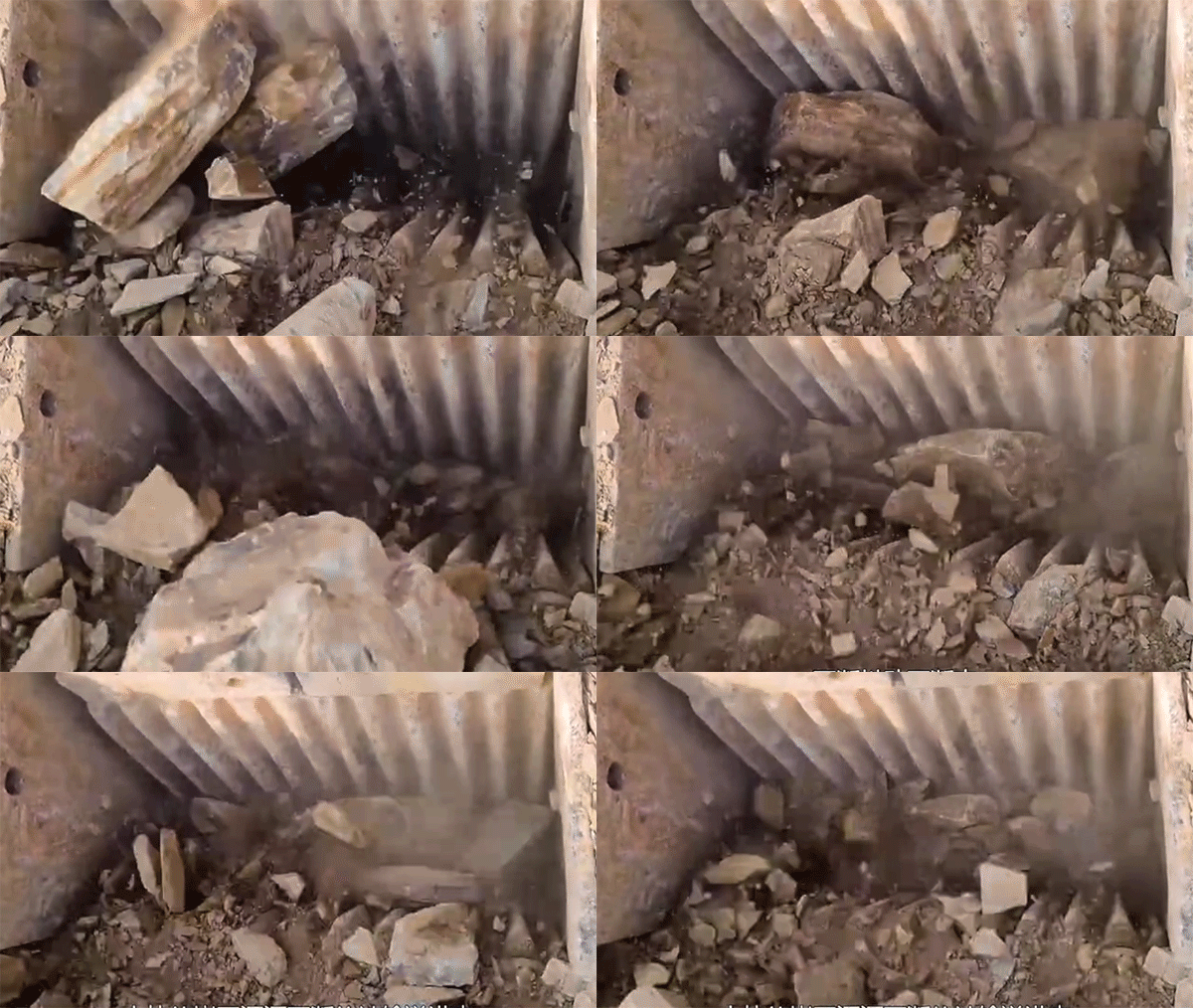
Key Advantages of
ZME Jaw Crusher
The ZME Jaw Crusher combines extreme structural strength with technological innovation to ensure maximum productivity in the most challenging mining environments.
- Structural Flexibility & Logistics Convenience:
- Modular Frame Design: For large models, ZME utilizes a non-welded modular assembly frame that simplifies transportation and installation in space-constrained sites, such as underground mines or high-altitude areas.
- High Impact Resistance: Welded frames for small-to-medium models undergo low-stress welding methods with generous transition radii, enhancing long-term reliability against heavy rock shock loads.
- Deep “V”-Type Crushing Chamber Geometry:
- Zero “Dead Zone”: The symmetrical deep “V” design guarantees smooth material flow without clogging, significantly increasing the reduction ratio.
- Capacity Efficiency: The combination of a large stroke and an optimized toggle plate angle boosts production capacity by up to 15–20% while delivering lower power consumption per ton.
- Heavy-Duty Components & Extreme Durability:
- Heavy-Duty Swing Jaw Assembly: Utilizing heavy-duty forged eccentric shafts and premium roller bearings optimized via FEM Analysis, expanding component wear life by 15–20%.
- Labyrinth Seal System: Centralized lubrication (automatic/manual) features a labyrinth seal to block mine dust contamination, keeping bearing temperatures stable and the work zone clean.
- Smart Operations & Rapid Maintenance:
- Double Wedge System: Closed Side Setting (CSS) adjustment uses a double wedge method (mechanical/hydraulic), which is much faster and safer than traditional shim systems, minimizing downtime.
- Large Flywheel Inertia: High-inertia flywheel design ensures smooth rotation and aggressive material bite—even on wet or slippery rocks—reducing wear on jaw plates.
- Eco-Friendly & Sustainable Commitment:
- Low-Noise Operation: The well-sealed equipment structure integrates with modern dust suppression systems, meeting international mine environmental standards and enhancing overall project life-cycle economics.
FAQ
What are the limitations of a Jaw Crusher in the crushing process?
Despite its robustness, the Jaw Crusher has limitations regarding grain shape control. Because its operating principle relies on unidirectional compressive force, it tends to yield material with a higher flakiness and elongation index compared to impact-type crushers.
In mineral processing, a Jaw Crusher serves purely as a primary size reducer and is not designed for precise mineral liberation. Operating with worn jaw plates or improper gap settings can cause inconsistencies in the output size, which in turn increases the workload on the secondary crushing stage.
Additionally, when processing rocks with extremely high compressive strength (above 250–300 MPa) and high abrasiveness, operating expenses (OPEX) can rise significantly. This is driven not only by power consumption, but primarily by accelerated wear on the jaw plates. Under such harsh rock conditions, the economic efficiency of the equipment may drop without proper alloy material selection, necessitating more frequent maintenance and higher replacement costs for the customer.
What are the common production line configurations for Jaw Crushers?
1. High-End Configuration (Premium Solution) Designed for medium-to-large-scale mining operations that demand superior final product quality and high operating efficiency.
- Main Equipment: Vibrating Feeder + Jaw Crusher + Cone Crusher (or Impact Crusher) + Vibrating Screen + Belt Conveyor.
- Selection Guide:
- Impact Crusher: Utilized for soft-to-medium hard rocks (e.g., limestone, coal, gypsum) to achieve excellent cubical particle shapes.
- Cone Crusher: Specifically used for hard and abrasive rocks (e.g., granite, basalt, iron ore, river gravel) to minimize wear part replacement costs.
2. Economical Configuration (Efficient Solution) Designed for budget-conscious projects or applications where specific particle shaping is not required.
- Designed Capacity: 200 tph.
- Feed Size: ≤ 600 mm.
- Final Product Size: 0–5 mm, 5–10 mm, 10–20 mm, 20–30 mm (adjustable).
- Main Equipment: Vibrating Feeder + Secondary Jaw Crusher (Coarse Type) + Fine Jaw Crusher (PEX Type) + Vibrating Screen + Belt Conveyor.
Brother, if you want to do a mining project, should you choose the classic PE Series Jaw Crusher or the modern C Series?
The C-Type Jaw Crusher is engineered for high-capacity processing of hard to highly abrasive materials. Utilizing modern crushing technology with a non-welded modular frame structure, it delivers superior fatigue resistance, maximum reliability, and installation flexibility. The symmetrical “V”-shaped crushing chamber boosts capacity by up to 1.3 times, the jaw plates feature toothed guards to extend wear life, and the motor is frame-mounted for simplified operation and maintenance.
Meanwhile, the PE Type features a simpler design, making it suitable for primary crushing of medium to hard materials. The deeper crushing chamber eliminates dead zones, resulting in high feed capacity and uniform final product size. Its straightforward structure ensures easy maintenance and low operational costs, making it widely utilized across mining, construction, and building material industries.
What are the main technical specifications of Type PE and Type C Jaw Crushers?
Wow, great question! It’s like choosing a car: Do you want a “work car” that is tough and cheap to maintain, or a “monster truck” that can crush anything? Come on, let’s cut it thin!
1. C Series (Heavy-Duty & High-Capacity Solution) Engineered for large-scale production and extremely hard to abrasive rock materials, the C Series delivers maximum stability for continuous operations.
- Feed Opening Dimensions: Width up to 2,000 mm with a depth of up to 1,500 mm.
- Maximum Feed Size: 430–1,200 mm.
- Discharge Setting Range (CSS): 40–300 mm.
- Technical Advantages: Symmetrical “V”-shaped crushing chamber ensures superior throughput efficiency, lower power consumption per ton, and highly reliable non-clogging performance.
2. C Series (Classic & Economical Solution) The industry-standard choice for general primary crushing, featuring a straightforward, reliable, and cost-effective mechanical design.
- Feed Opening Dimensions: Width up to 1,500 mm with a chamber depth up to 1,800 mm.
- Maximum Feed Size: 125–1,200 mm.
- Discharge Setting Range (CSS): 60–350 mm.
- Technical Advantages: Simplified structural design enables effortless routine maintenance, minimizes operational expenses (OPEX), and outputs consistent material gradation
If your project operates on a large scale with extremely hard rock conditions, the C Series is the ultimate choice. However, for standard aggregate projects requiring reliable, cost-effective, and steady operations, the PE Series remains the top performer.
How Does a Jaw Crusher “Chew” Stone? (Only 4 Steps!)
Many people think the working principle of a Jaw Crusher is complicated, but it is actually very simple! It is essentially all about power transfer from the engine to crush rocks. Just imagine a giant jaw eating. Here is the process flow:
- Preparing Power Transmission: First, the electric motor starts rotating and drives the pulley via a belt. This is where energy is gathered to move the heavy components inside.
- Oscillation of the Eccentric Shaft: Next, this pulley rotates the eccentric shaft. Because this shaft is eccentric, it pushes the connecting rod and the swing jaw to start moving. Its motion is a combination: both forward-backward and up-down!
- Time to “Chew” the Rocks: As the swing jaw moves forward toward the fixed jaw, that is where the magic happens. Giant rocks trapped in the middle are immediately subjected to compressive, splitting, and bending forces until they break apart.
- Release and Flow! Finally, as the swing jaw moves back away, the crushed rocks slide down due to gravity and exit through the discharge opening at the bottom. Because the movement rotates continuously without stopping, this “chewing” process becomes highly efficient and continuous.
In short: As long as the machine is running, these forward-backward and up-down movements occur simultaneously. Therefore, your ZME Jaw Crusher will not stop eating until the rocks run out!
Choose “The Nipper” or “The Striker”? Here is the Difference Between Jaw Crusher vs Hammer Crusher!
Often confused when choosing between a Jaw Crusher or a Hammer Crusher? Put simply: one works steadily with high crushing force, while the other hits aggressively but produces a lot of dust. Let’s compare them:
- Jaw Crusher: “The Patient Nipper” It works like a giant jaw that grips and squeezes rocks gradually until they break.
- Expert at Hard Rocks: Whether it’s granite, basalt, or super-hard iron ore, it stays fearless.
- Minimal Dust: Since its principle relies purely on compression, it produces mostly lump material with very little dust.
- Durable & Economical: Its jaw plate components are extremely long-lasting. Maintenance is simple, and setting the discharge opening is easy.
- Ideal for: Mine owners who need a durable machine to crush stubborn rocks.
- Hammer Crusher: “The High-Speed Striker” This machine acts like thousands of iron hammers striking rocks at high speeds to shatter them instantly.
- Soft Rock Specialist: It works best when fed with limestone or coal. But if fed with hard rocks, its hammers will wear out quickly.
- High Dust & Fines: Because the system relies on high-impact striking, the output naturally contains significantly more powder and dust.
- High-Maintenance: Its hammer components wear out faster and require frequent replacement. Maintenance costs tend to be higher.
- Ideal for: Cement plants or coal processing operations that require fine output sizes in a short time.
Conclusion? If you operate in hard rock mining and want a low-maintenance machine, the ZME Jaw Crusher is the wisest choice. But if your material is soft and requires an immediate fine reduction, then consider a Hammer Crusher!