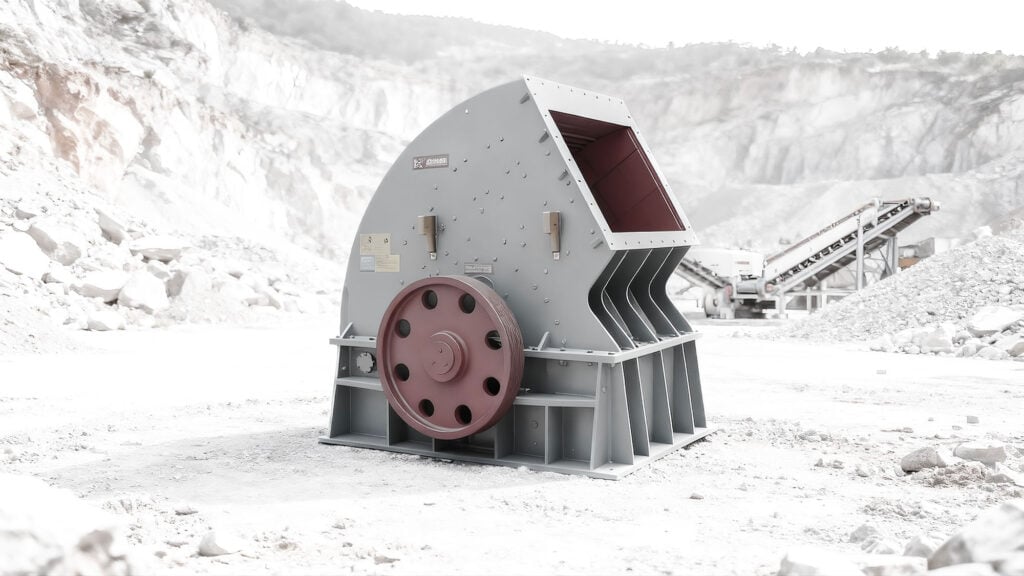
High-Capacity One-Step Crushing Solutions
Hammer Crusher
Crushes material through a combination of high-speed hammer impacts and intensive attrition. The ZME Hammermill Crusher is the most efficient solution for secondary crushing stages, specifically engineered for soft to medium-hard materials such as limestone, coal, and gypsum. Achieve maximum reduction ratios with a more economical investment cost.
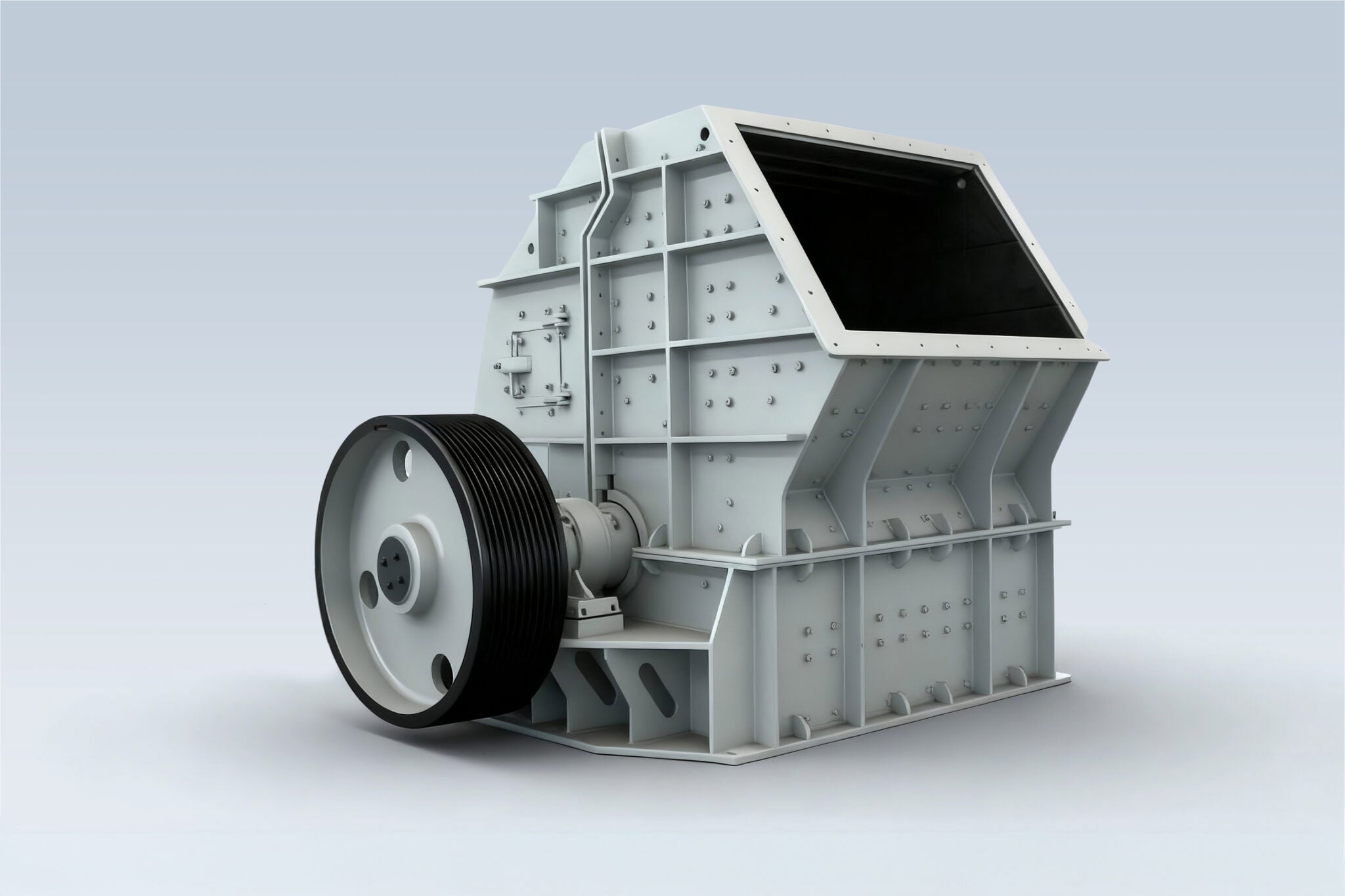
What is
Heavy Hammermill Crusher?
In aggregate production, the Heavy Hammermill Crusher is the top choice for friable materials of medium hardness. Its primary advantage is an exceptionally high reduction ratio, allowing it to replace multiple machinery units at once. It serves as a smart solution to lower upfront capital expenditure and simplify your production workflow.
This machine accepts massive feed input sizes up to 600–1000 mm, instantly crushing them down to a product size of ≤35 mm via high-speed hammer impacts. Flexibility is key: the discharge particle size can be easily adjusted by tuning the grate bar gap settings.
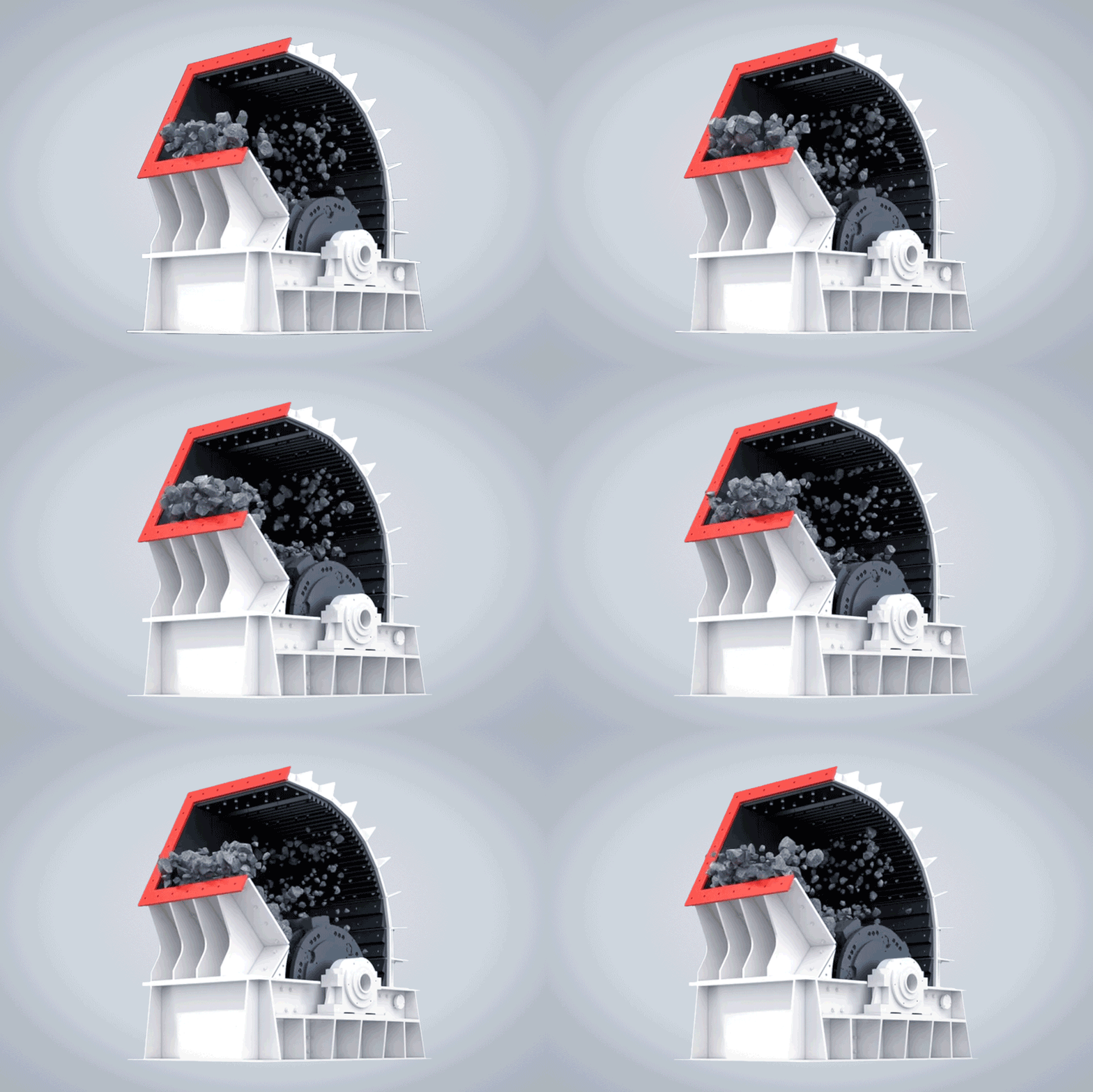
How It Works?
ZME offers tailored advantages through two distinct rotor designs engineered to meet your specific operational needs:
Reversible Rotor: Specialized for fine crushing with highly precise particle size results.
Irreversible Rotor: Heavy-duty design engineered to work across multiple stages, from primary to tertiary crushing in a single unit. Utilizing large-diameter rotors and heavy hammers, our Heavy Hammermill type guarantees high throughput and significantly higher reduction ratios.
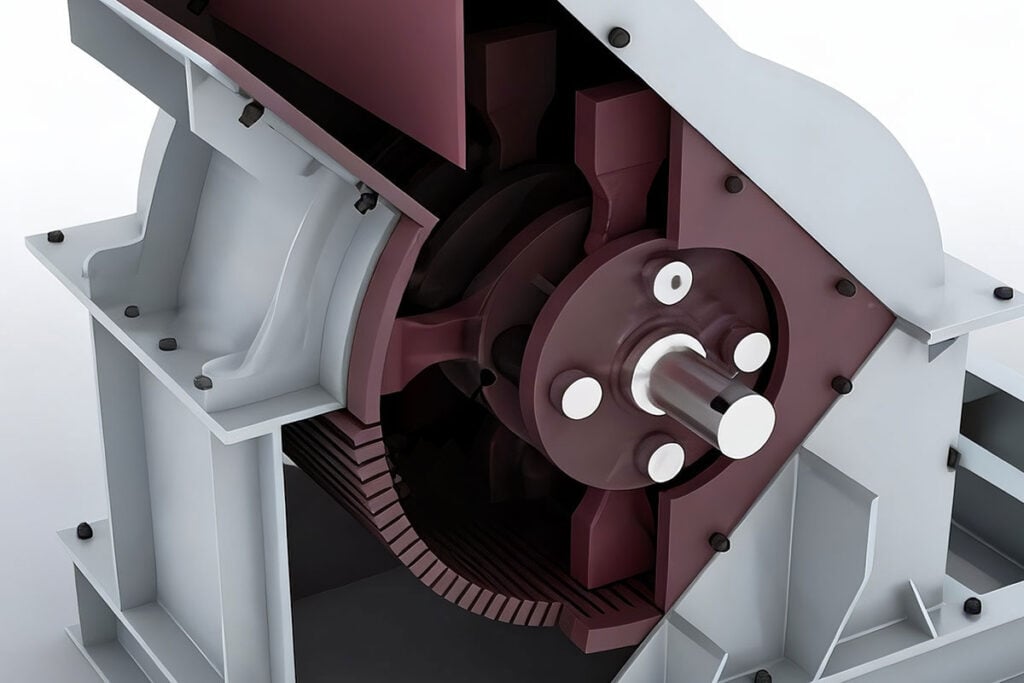
Operating on high-speed impact principles, material entering the crushing chamber is instantly struck by rotating hammers and thrown against the impact plates. Particles that reach the target size pass through the grate bar gaps, while oversized material continues to undergo reduction until uniform dimensions are achieved.
Innovations in rotor engineering and premium material construction ensure the ZME Hammermill Crusher excels in energy efficiency and durability. It is exceptionally well-suited for processing soft to medium-hard industrial materials, such as limestone, gypsum, coal, and various industrial minerals.
Applications of
the Hammermill Crusher
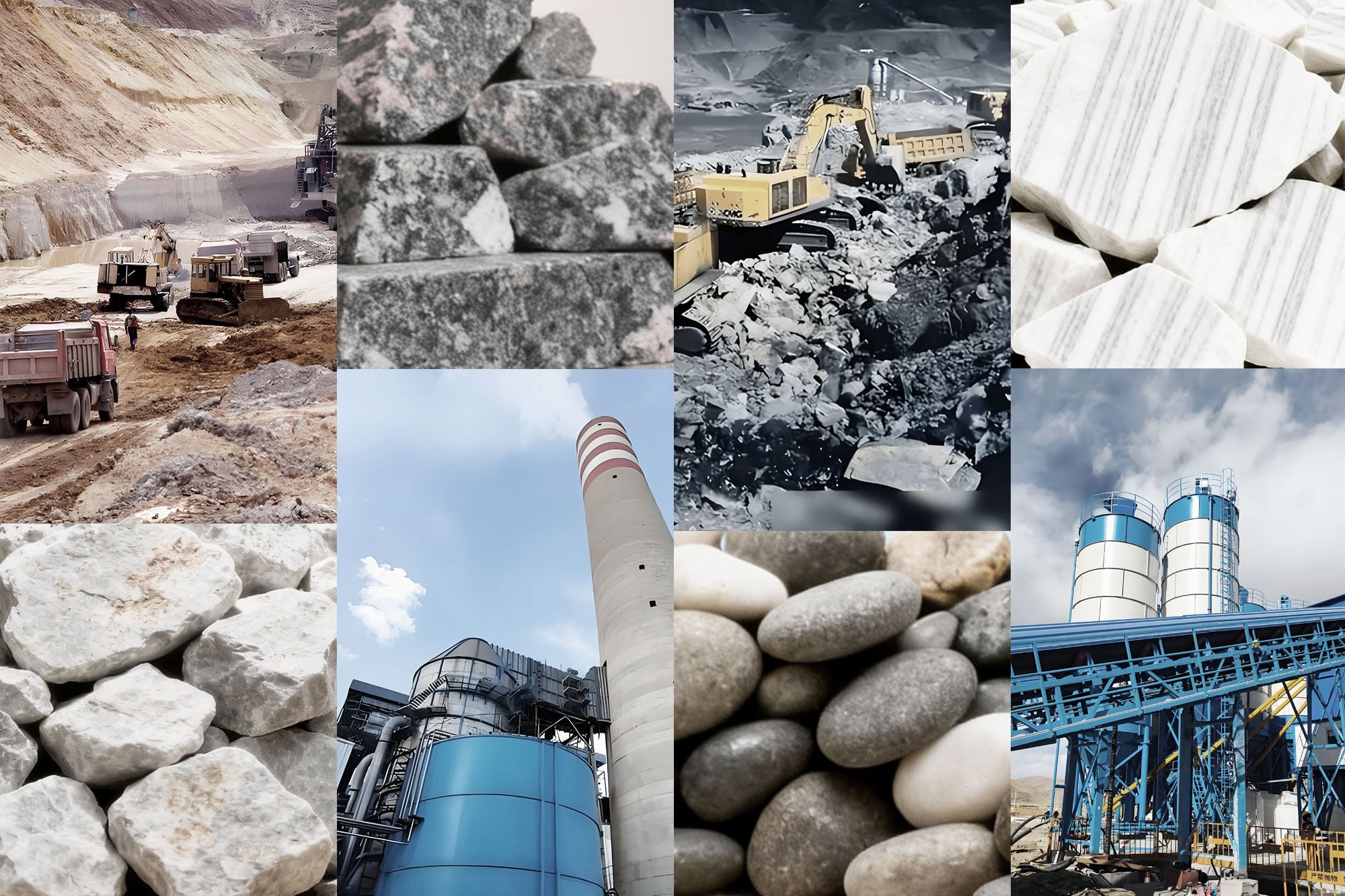
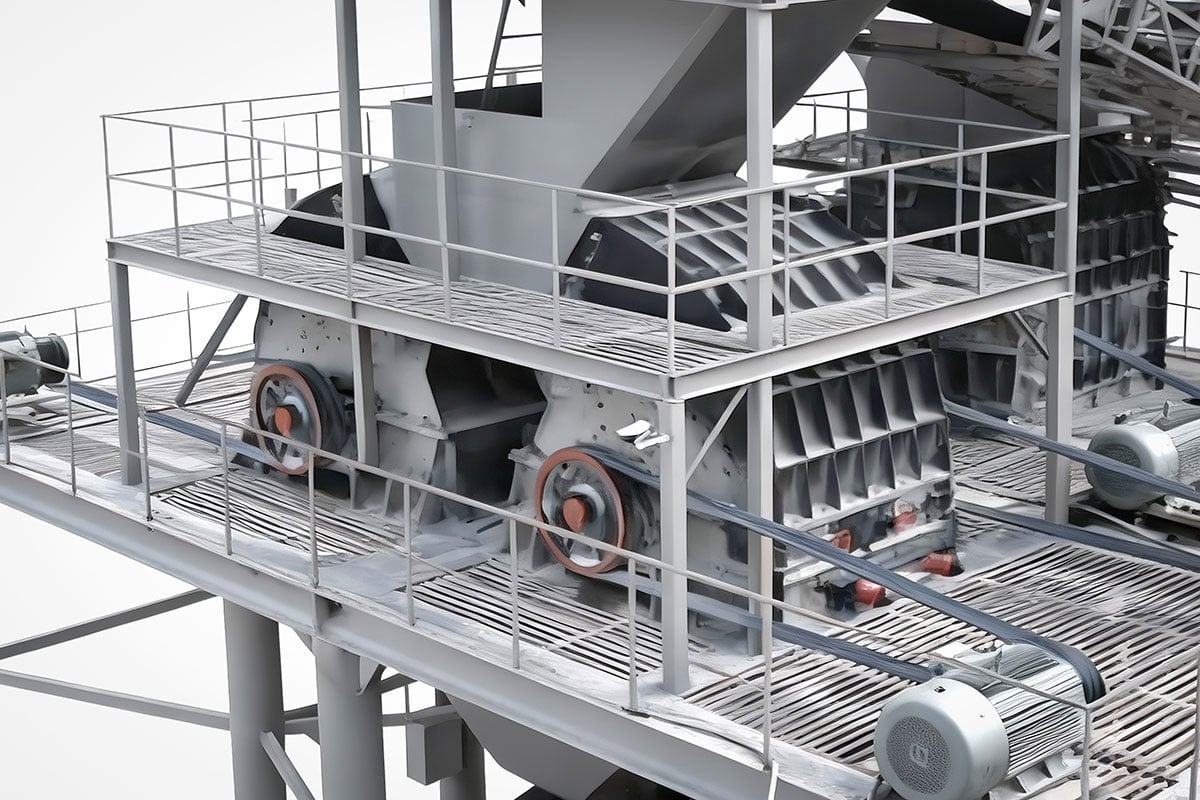
The ZME Hammermill Crusher is an ideal choice for producing uniformly sized aggregates to support large-scale infrastructure projects. From highways and bridges to airport runways, this machine guarantees a supply of high-quality materials meeting modern construction standards.
In the mining sector, this machine is highly effective for crushing ores and waste rocks into smaller particles. ZME engineered this equipment to precisely prepare materials for the cement, metallurgy, and chemical industries, ensuring subsequent processing stages run with maximum efficiency.
It is exceptionally suited for a wide range of materials, including limestone, gypsum, coal, and dolomite. Featuring a high reduction ratio and low energy consumption, the ZME Hammermill Crusher represents the most cost-effective solution to boost production capacity while lowering daily operational expenses.
Top 3 Important Factors for
ZME Hammermill Crusher
The ZME Hammermill Crusher delivers high capacity for efficiently processing soft to medium-hard friable materials, producing uniform particle size distribution, and maintaining low operational costs through a design that minimizes wear and maximizes energy efficiency.
High Capacity
This machine is capable of handling large feed sizes and executing crushing stages from primary to tertiary within a single unit.
- Unit Efficiency: ZME’s innovative design reduces the need for multiple machines, saving floor space and capital investment costs.
- Flexible Output: Delivers versatile end products (coarse, medium, to fine) featuring uniform particle shapes and high structural integrity.
High Durability and Low Operational Costs
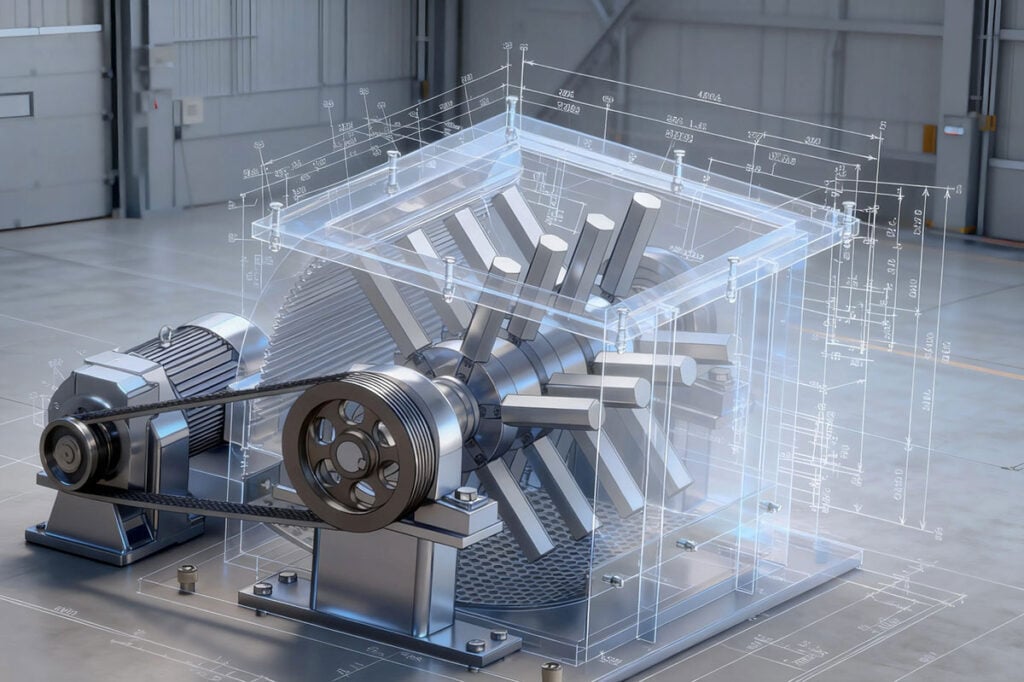
The ZME transmission system utilizes a statically balanced rotor and world-class bearings to extend mechanical service life.
- Durable Hammers: Our latest technology increases hammer wear life by 4 to 6 times compared to conventional methods.
- Precision Control: Adjustable rotor speeds and grate bar gaps allow precise product size control while significantly driving down energy consumption per ton.
Easy Operation and Eco-Friendly Design
ZME engineered this machine to be lightweight and flexible in installation without compromising structural robustness.
- Quick Access: A hydraulic opening mechanism allows instant access to internal components for fast maintenance.
- Environmental Protection: Equipped with vibration-damping technology to minimize operational noise and an advanced air circulation system to suppress dust emissions at the mine site.
Advantages of
ZME Hammermill Crushers
The ZME Hammermill Crusher features heavy-duty rotors and wear-resistant composite hammers, utilizing a symmetrical design to extend service life. Both feed and discharge settings are adjustable, while the advanced lubrication system maintains low bearing temperatures. The combination of a snail shell frame and a heavy rotor ensures high capacity, energy efficiency, and effortless operation and maintenance.
- Robust Construction & Snail Shell Design
ZME engineers the machine body with a reinforced Snail Shell structure. This design ensures exceptional frame strength, high impact resistance, and structural stability in compact footprints.- Heavy & Reliable Rotor: Utilizes a heavier rotor to increase the moment of inertia, significantly boosting crushing capacity.
- Chromium Composite Hammers: Equipped with high-chromium, wear-resistant composite hammers featuring eight hammer pin holes (including four spares) to maximize service life.
- Grate-Free Mechanism & Advanced Protection
ZME’s technical innovations ensure smooth operation by overcoming traditional operational bottlenecks:- Grate-Free Design: Unlike conventional mills, this screenless design eliminates material clogging risks, making it highly effective for high-speed production flows.
- Overload Protection: Integrated elastic buffering systems automatically protect the machine from damage caused by unbreakable objects or overload conditions.
- Controlled Particle Distribution: Despite the absence of grate bars, it maintains a high reduction ratio with a balanced and adjustable particle size distribution.
- Maintenance Convenience & Energy Efficiency
ZME prioritizes minimizing downtime through intelligent maintenance engineering:- Rapid Replacement: Features wear-resistant protective rings with spring pins alongside optional auxiliary tools, enabling fast hammer and shaft replacement with minimal manpower.
- Stable Operating Temperatures: An advanced lubrication system keeps bearing temperatures low, ensuring stable performance over extended running hours.
- Energy Savings: Our latest technology supports eco-friendly operations without compromising overall crushing performance.
Technical parameters
Parameter Mesin Hammermill Crusher
| Model | Rotor Diameter / Length (mm) | Maximum Feed Size (mm) | Discharge Size (mm) | Production Capacity (t/h) | Motor Power (kW) | Weight (t) |
| PCZ1212 | 1250×1250 | ≤350 | 0–50 | 100–140 | 90×2 | 14 |
| PCZ1414 | 1400×1400 | ≤400 | 0–60 | 240–450 | 132×2 | 17.5 |
| PCF1616 | 1600×1600 | ≤500 | 0–60 | 300–550 | 160×2 | 26 |
| PCZ1818 | 1800×1800 | ≤800 | 0–80 | 320–650 | 250×2 | 40 |
| PCZ1820 | 1800×2000 | ≤800 | 0–80 | 320–680 | 315×2 | 55 |
| PCZ2225 | 2200×2500 | ≤800 | 0–100 | 400–1000 | 500×2 | 80 |
FAQ
What Are the Main Components of a Hammermill Crusher and How Do They Function?
Frame Body and Service Doors: The Hammermill Crusher housing consists of a lower body, upper rear cover, left side wall, and right side wall, securely bolted together into a rigid structure. The interior frame is lined with wear-resistant manganese liner plates to withstand high-impact material wear. Access service doors are strategically located on the lower frame and side panels to facilitate maintenance, hammer replacement, and grate bar servicing, ensuring optimal operational efficiency. The housing also features shaft seals to prevent dust leakage, maintaining a clean and safe workplace.
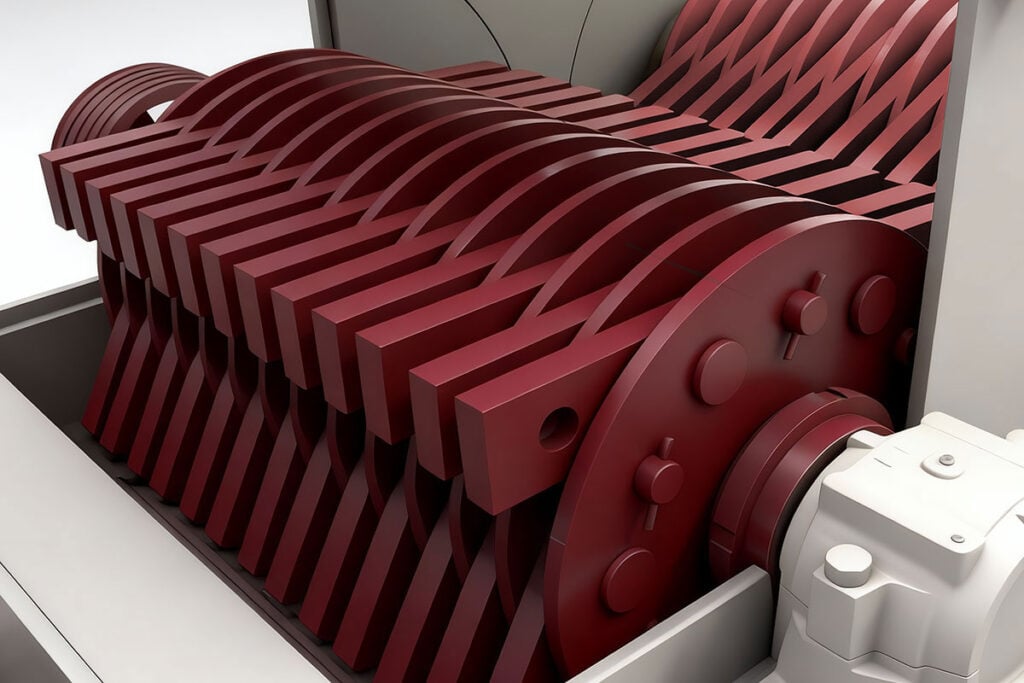
Rotor Assembly, Main Shaft, and Hammer Discs: The rotor is the core working component of the Hammermill Crusher, comprising the main shaft, hammer discs, locking pins, and swing hammers. The hammer discs support and suspend the hammers via pin shafts, while the main shaft is forged from high-grade alloy steel to withstand extreme rotor loads and dynamic impact forces. Integrated flywheels store rotational kinetic energy, dampening motor peak loads and extending hammer life. The synchronized operation of the shaft and discs guarantees uniform and high-throughput material reduction.
Hammers, Liners, and Performance Efficiency: Hammers are the primary wear component, ranging in weight from 15 kg up to 298 kg, engineered from multi-element chromium-manganese alloy steel for high impact toughness and wear resistance. Heavy-duty liners and impact plates line the crushing chamber to shield the outer frame from abrasive material impacts. The combination of premium metallurgy, dynamic rotor balancing, and optimized shielding allows the equipment to deliver max capacity, high energy efficiency, and extended service life even under severe continuous operating conditions. Beyond direct hammer impact, the system leverages massive rotor inertia for rapid, uniform, and precise material crushing.
What is the difference in operating principle between a Jaw Crusher and a Hammermill Crusher?
The primary distinction between a Jaw Crusher and a Hammermill Crusher lies in their fundamental operating principles and material reduction mechanics. A Jaw Crusher operates on compressive mechanical force and eccentric motion, where material is repeatedly squeezed and crushed between a moving jaw and a fixed jaw. This high compressive force causes rocks to fracture along their natural weakness planes, resulting in a controlled crushing process with significantly lower fines and dust generation.
Conversely, a Hammermill Crusher reduces material primarily through high-velocity impact forces generated by high-speed rotating hammers. The feed is struck, sheared, and collided internally, creating secondary impact-crushing effects. However, this high-impact mechanism tends to produce a higher proportion of dust and fine particles, which may require dust suppression considerations in large-scale operations or environments with strict emission regulations.
Which components wear out most easily in a Jaw Crusher versus a Hammermill Crusher?
In a Jaw Crusher, the components most susceptible to wear are the moving jaw plate and the fixed jaw plate, as both make direct contact with incoming rock during the compression process. Surface wear occurs primarily along the main material crushing zone. Under normal operating conditions, jaw plates maintain an average service life of up to one year, depending on material abrasiveness and throughput intensity.
In a Hammermill Crusher, the hammers represent the highest-wear component. As they extend outward during high-speed rotation, they undergo severe impact and abrasive wear across their leading edges, trailing edges, and side profiles. Consequently, hammer service life is relatively short, often averaging around one month. Additionally, the rotor body and lower grate bar screens face elevated wear risks due to continuous dynamic impacts with hard materials.
How do Jaw Crushers and Hammermill Crushers compare in terms of maintenance costs and complexity?
A Jaw Crusher features a relatively straightforward and robust design, consisting of a main frame, jaw transmission assembly, adjustment mechanism, flywheels, and a lubrication system. In practical operation, beyond routine greasing and periodic inspections, minimal additional maintenance expenditure is required. This low maintenance overhead makes Jaw Crushers exceptionally economical for long-term production in mining and aggregate sectors.
In contrast, a Hammermill Crusher incurs significantly higher maintenance costs. A single unit can house over 100 individual hammers, making complete hammer set replacements a substantial financial investment. Furthermore, servicing and replacing the lower grate screens is labor-intensive and time-consuming. Consequently, total maintenance expenses and operational downtime for Hammermill Crushers tend to be higher than those for Jaw Crushers.
What is the difference in discharge opening adjustment methods between the two machines?
A Jaw Crusher employs a straightforward and practical adjustment method by adding or removing shims (spacer plates) at the toggle seat behind the moving jaw. This mechanism allows operators to quickly and reliably calibrate the final output size without complex structural modifications to the frame.
Conversely, a Hammermill Crusher regulates discharge size by replacing or adjusting the lower grate bar screens or changing the length of the hammers. This process is not only more labor-intensive but also demands extended machine downtime. Consequently, the Jaw Crusher offers a distinct advantage in operational flexibility and adjustment convenience.
Which materials are best suited for a Jaw Crusher compared to a Hammermill Crusher?
A Jaw Crusher is ideal for processing a wide spectrum of soft to high-hardness materials, particularly rocks with compressive strengths between 150–350 MPa, such as granite, quartzite, iron ore, basalt, and other hard formations. Because the moving jaw plate is directly coupled to the drive mechanism, mechanical energy is maximized to crush large, heavy feed boulders.
Beyond primary compressive force, the Jaw Crusher leverages impact forces between the rock and jaw plates, as well as inter-particle collision within the chamber, generating secondary crushing action. This process maximizes kinetic energy efficiency, making the Jaw Crusher vastly superior for hard and highly abrasive feedstock in Aggregate Production Lines while maintaining a lower total power consumption compared to a Hammermill Crusher.