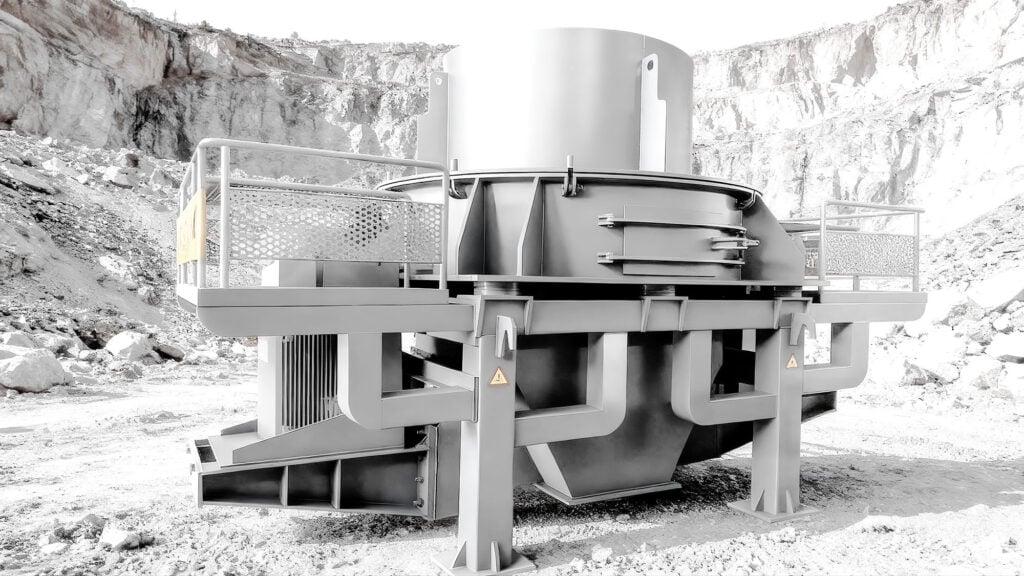
High-Performance Crushing for Superior Cubic Aggregates
Vertical Shaft Impact Crusher (VSI)
ZME‘s state-of-the-art solution for high-quality sand production utilizing impact and attrition principles. The Vertical Shaft Impact Crusher (VSI) serves as the primary powerhouse in tertiary and quaternary crushing stages, delivering exceptionally fine and precise material gradations.
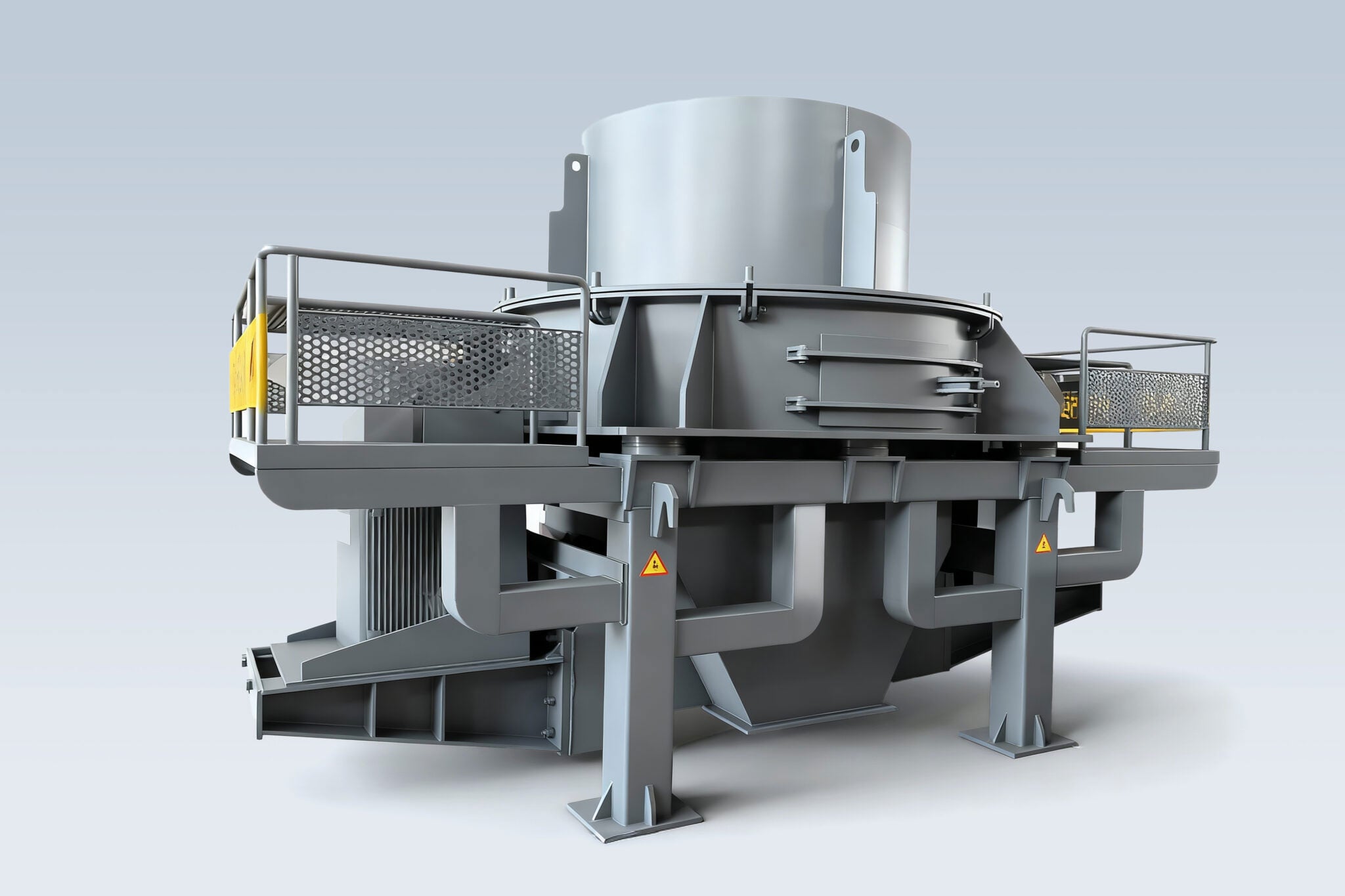
What Is
Vertical Crusher (VSI)?
As a modern solution, this VSI series surpasses traditional sand makers by saving up to 50% energy while boosting production capacity by up to 30% at the same power consumption. It stands as the most economical choice for long-term operations in your quarry or mine.
This machine processes secondary crushing material (ranging from 38–150 mm) into high-quality finished products. The VSI works to refine both size and particle shape to produce premium concrete aggregate and building stone with a precise output size range between 6–38 mm.
Vertical Shaft Impact Crusher, commonly abbreviated as VSI Crusher or referred to as a Vertical Shaft Impactor, is also known across the industry as VSI Impact Crusher, Sand Making Machine, or Vertical Impact Crusher.
How It Works?
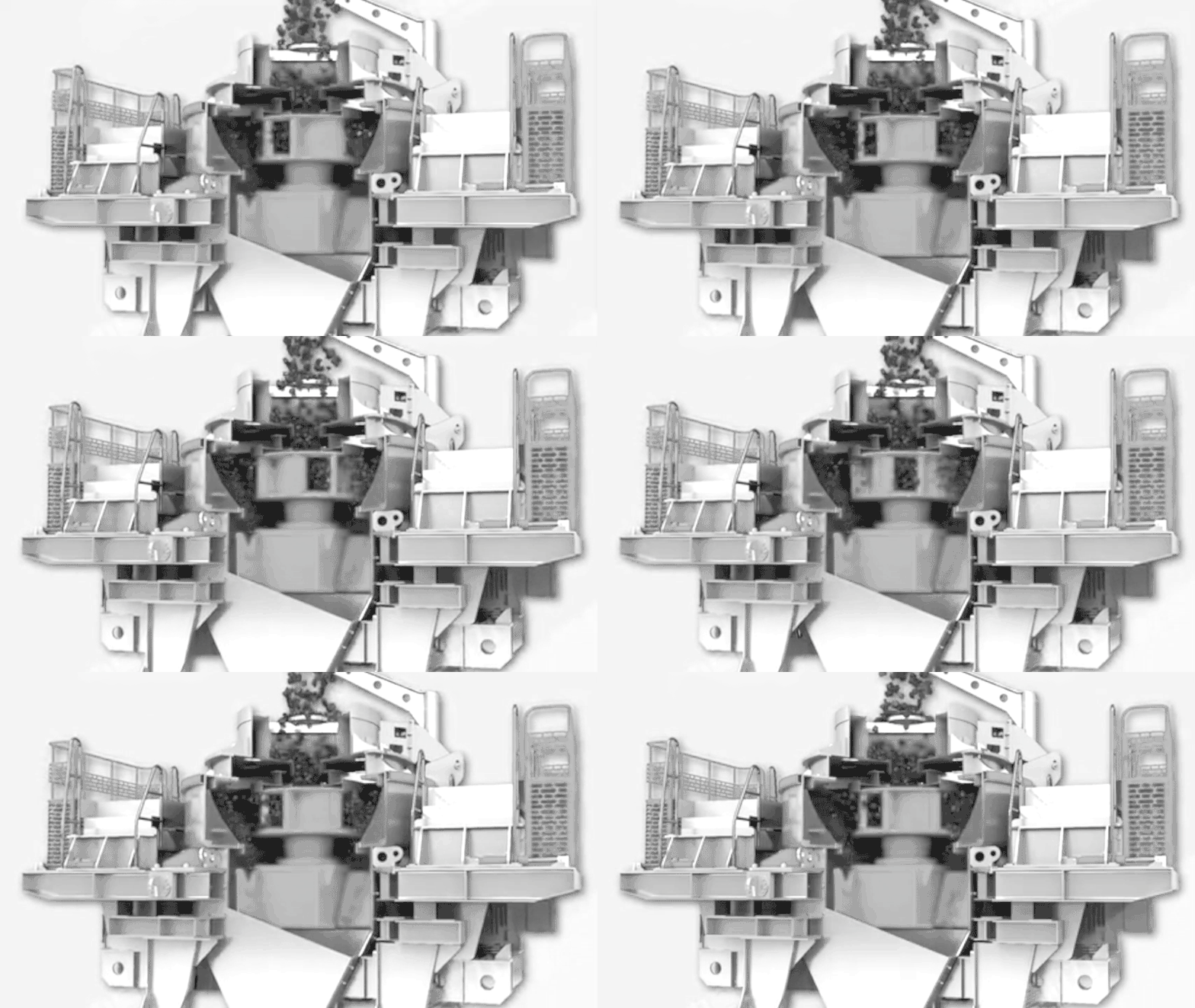
The operating principle of a VSI involves a high-speed rotor that accelerates material and hurls it toward impact anvils or a rock shelf. By projecting material against these crushing surfaces, rocks break naturally into smaller particles with uniform shapes and high quality.
The operating principle of a VSI involves a high-speed rotor that accelerates material and hurls it toward impact anvils or a rock shelf. By projecting material against these crushing surfaces, rocks break naturally into smaller particles with uniform shapes and high quality.
Technological innovation, precise speed control, and extraordinary crushing performance make ZME VSIs stand out in the market. This machine is highly effective for manufactured sand production and premium concrete aggregate applications, delivering stable output sizes ranging between 6–38 mm.
Applications of Vertical Shaft Impact Crushers
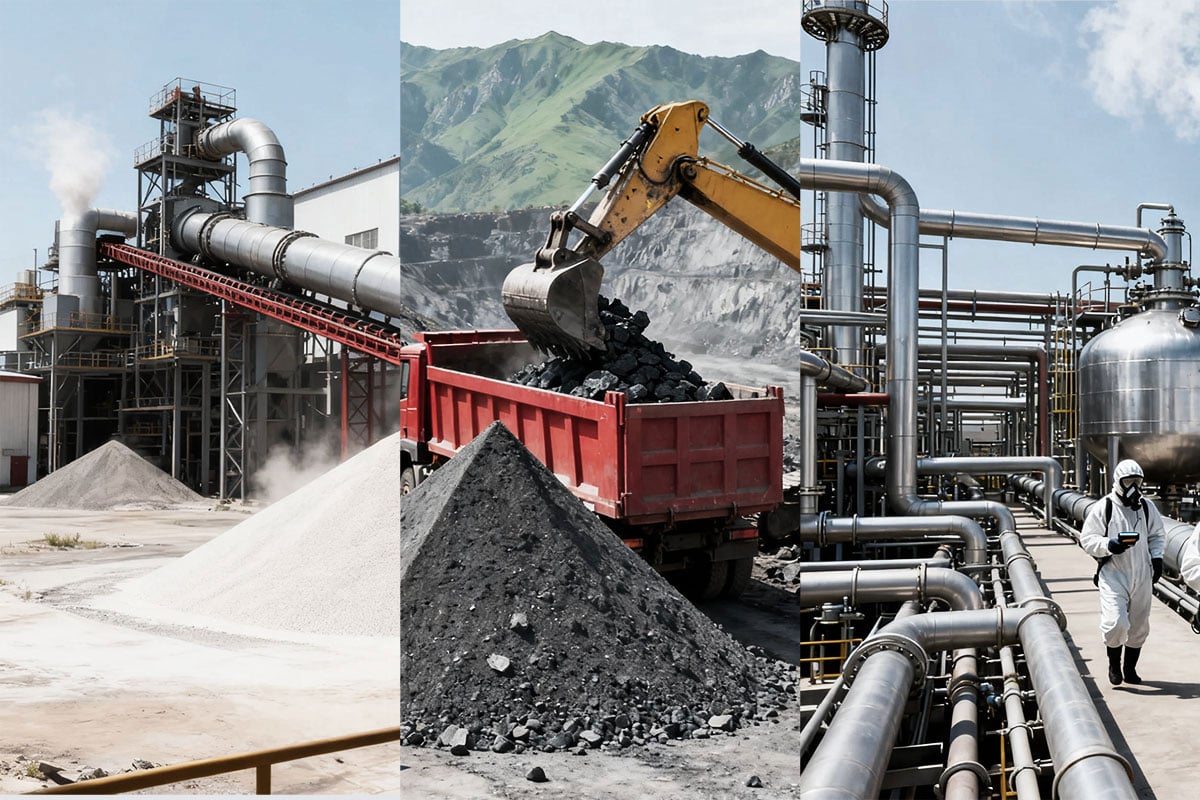
Vertical Shaft Impact Crushers (VSIs) are widely used to produce high-quality manufactured sand and shape rocks into precise gradations. This machine is the ideal choice for strategic infrastructure projects such as highways, bridges, airports, and public facilities that demand high-standard construction materials.
In the mining sector, VSIs effectively crush hard rock, ores, and mineral waste into fine particles suited for subsequent grinding stages. Their superior material preparation capabilities make them indispensable across the cement, metallurgical, chemical, abrasives, and ore tailings processing industries.
Engineered to process diverse materials including river gravel, granite, basalt, and dolomite, this machine guarantees a cubic final product with uniform size distribution. ZME VSIs deliver maximum energy efficiency and low operational costs, setting the industry benchmark for aggregate and manufactured sand production.
Top 3 Key Advantages of
ZME Vertical Shaft Impact Crusher
The ZME Vertical Shaft Impact Crusher delivers high throughput capacity for efficient material processing, produces cubic finished products with uniform grain size, and ensures low operational costs thanks to an innovative design that minimizes wear component consumption and energy usage.
High Capacity
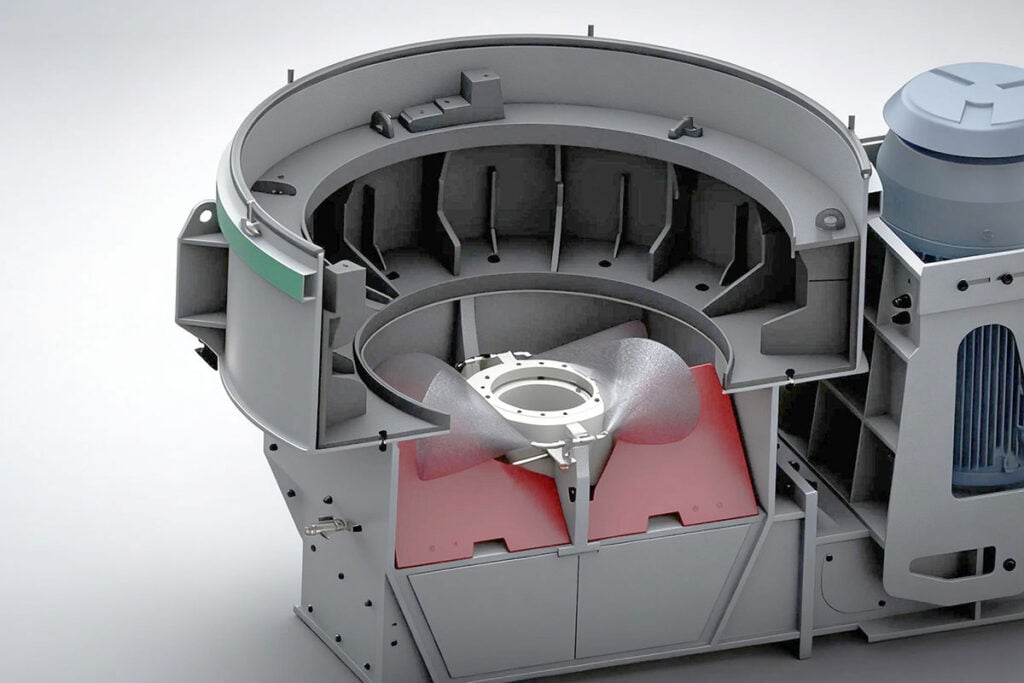
The ZME VSI features an adjustable feed opening capable of handling throughputs from 350–650 t/h. By utilizing both “Stone-on-Stone” and “Stone-on-Iron” crushing modes, this machine achieves a single-pass sand-making efficiency rate of over 33%, representing a 3% increase over previous models.
In large-scale production, the key priority is maximizing throughput while maintaining consistent particle gradation. The VSI ensures a steady material flow for optimal operational output.
Note: High capacity does not compromise premium quality, yielding uniform cubic aggregate ideal for high-spec manufactured sand production.
DURABILITY AND LOW OPERATING COST
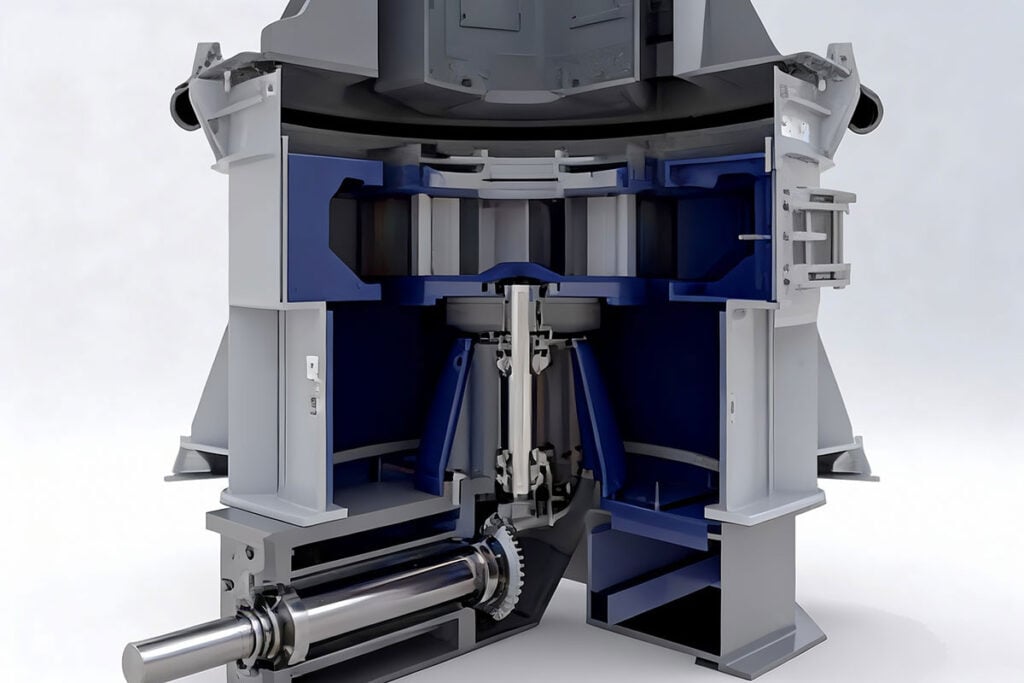
Equipped with a statically balanced rotor and premium imported bearing assemblies, the drive system’s service life is significantly extended. Wear parts are engineered to last over 200 hours in hard rock applications and over 600 hours in soft rock conditions.
The center + cascade feeding system combined with rotor speed adjustment allows precise product gradation control while reducing energy consumption per ton. The hydraulic assist mechanism boosts adjustment efficiency by up to 20%.
Note: The optimized design minimizes wear part friction, lowers maintenance costs, and extends the lifespan of critical components.
Easy Operation and Environmental Friendly Design
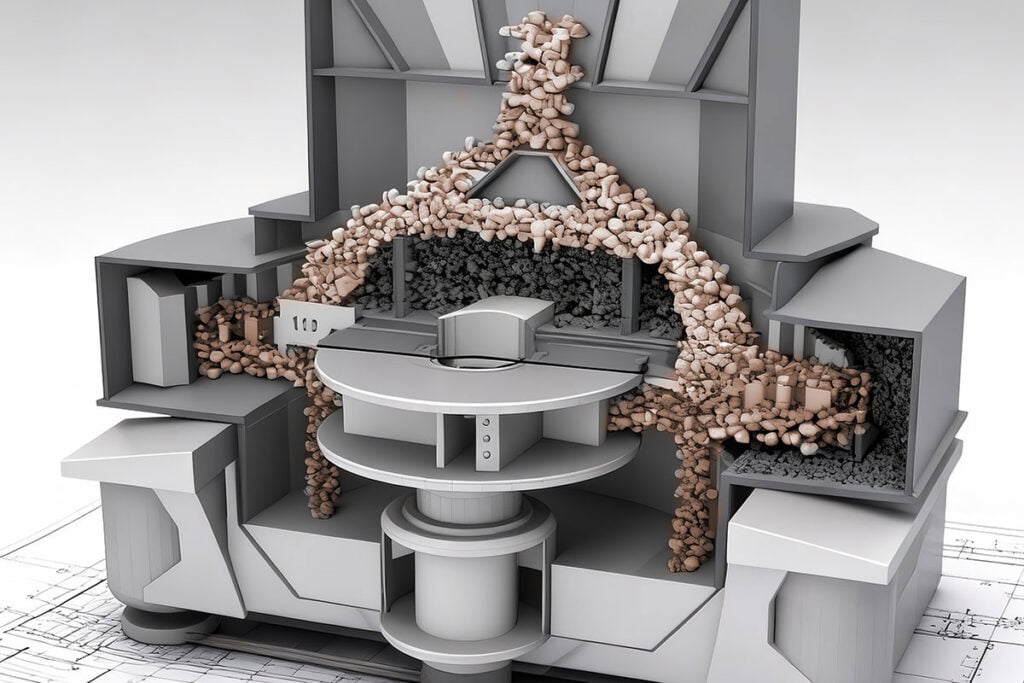
The ZME VSI machine features a lightweight and flexible installation design, making operation and maintenance remarkably simple. The hydraulic cover-opening system enables instant access to internal components for rapid inspection or parts replacement (fast maintenance).
Advanced shock-absorption technology minimizes noise levels, while the internal air circulation system significantly reduces dust emissions. High-quality core components ensure a low failure rate and exceptionally reliable performance.
Note: The ZME VSI design achieves maximum efficiency and energy savings while fully complying with modern industrial environmental standards.
Key Advantages of ZME VSI Crusher
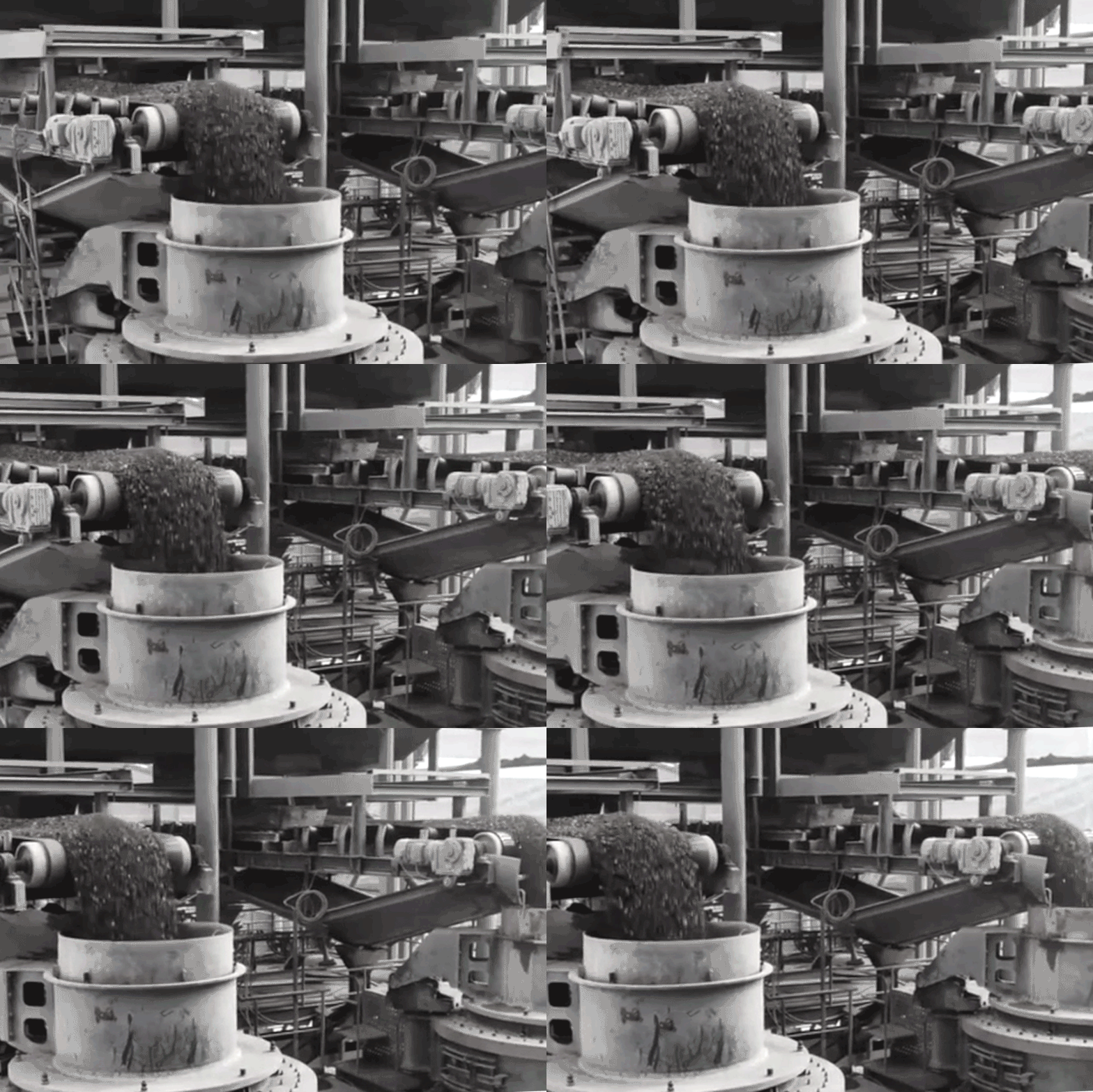
The ZME Vertical Shaft Impact Crusher combines cutting-edge materials like 42CrMo steel with a thin-oil lubrication system to guarantee peak performance even in the most demanding mining environments.
- Durability & Premium Materials
Utilizing imported bearings and a 42CrMo steel shaft, ZME enhances mechanical lifespan by up to 15%. The simulation-optimized lightweight rotor ensures precise impact delivery, backed by BTMCR26 & GA10 wear liners that boost service life by 15%. Its symmetrical design allows components to be flipped for dual usage, maximizing spare part longevity. - High Operational Flexibility
ZME ZME provides complete control for precise output specifications:- Dual Mode: Seamlessly switch between “Stone-on-Stone” and “Stone-on-Metal” crushing modes.
- Smart Feeding System: The center + overflow feeding method increases overall capacity by >20%.
- Variable Control: Rotor speed can be flexibly adjusted according to rock types (basalt, granite, or limestone).
- Advanced Lubrication & Practical Maintenance
Long-term reliability is guaranteed by modern protection systems:- Thin-Oil Lubrication: Imported component lubrication maintains bearing temperatures stably below 60°C.
- Hydraulic Mechanism: Inlet clearance adjustments require only a single operator, cutting maintenance time by up to 20% and minimizing downtime.
Technical parameters
Parameter Vertical Shaft Impact Crusher (VSI)
| Model | Maximum Feed Size (mm) | Rotor Working Diameter (mm) | Rotor Speed (rpm) | Production Capacity (t/jam) | Motor Power (kW) | Weight (kg) | Machine Dimensions (mm) |
| VI600 | 60 | 610 | 1200–2300 | 120 | 160 | 6500 | 3670×1821×2100 |
| VI800 | 75 | 813 | 1200–2000 | 180 | 200 | 7900 | 4037×2070×2375 |
| VI1000 | 80 | 1050 | 1200–1800 | 240 | 250 | 12000 | 4890×2386×2678 |
| VI1200 | 90 | 1260 | 1200–1500 | 360 | 320 | 16000 | 5300×2856×3168 |
FAQ
What is the Difference Between a VSI and Jaw, Cone, Impact, or Hammer Crushers?
Although all are classified as “crushers,” they have vastly different specializations on site. Here is a summary breakdown:
- Production Line Stage Sequence
- Jaw & Impact/Cone Crushers: Operate in the primary and secondary stages. Their job is to break down massive boulders directly from quarry blasting.
- ZME VSI: Operates in the final (tertiary/quaternary) stage. Its sole focus is sand making and rock shaping (cubical enhancement).
- Feed Size vs. Final Product Size
- Primary Crushers (Jaw/Impact): Can handle massive rocks sized 1–2 meters and reduce them to under 50 mm.
- ZME VSI: Accepts only small gravel sized 20–50 mm and transforms it into fine construction sand below 5 mm. Warning: Feeding oversized material will cause severe equipment damage!
- Material Specialization
- VSI: Ideal for hard, brittle materials (quartz, iron ore, clinker) to produce premium concrete sand.
- Others: Focus primarily on crushing natural rock (granite, limestone, river stone) into road base aggregate.
How Does a Vertical Shaft Impact (VSI) Crusher Work in Material Reduction?
The working principle of the ZME VSI is essentially a high-speed “chain reaction collision” process designed to yield premium manufactured sand. Here is the step-by-step mechanism:
- Ultra-High Speed Acceleration (Cannon Effect): Material enters the rapidly spinning impeller, where rocks are shot outward at extreme velocities, building tremendous kinetic energy.
- Dual Collision Modes:
- Stone-on-Stone: Accelerated rocks collide directly with a curtain of freely falling rocks, minimizing metal wear component wear.
- Stone-on-Iron: Accelerated rocks strike metal impact anvils for sharper, high-efficiency reduction.
- Material Curtain Effect (Continuous Cycle): Bouncing rock particles fall back into the path of subsequent incoming material, forming a continuous “material curtain.” Every grain undergoes repeated impacts, friction, and grinding before discharging.
The Final Result? You achieve perfectly cubic manufactured sand—free of elongated or flat particles—meeting the highest quality standards for premium concrete applications.
What Are the High-Wear Components of a VSI Crusher?
Operating at high speeds to shatter rock, components with direct material contact naturally experience wear over time. Below is the checklist of the most critical wear parts:
- Impeller: The core rotor driving material movement.
- Impact Blocks & Wear Blocks: The primary shields absorbing direct rock impacts.
- Flow Plates (Guide Plates): Channel material pathways within the chamber.
- Surrounding Guard Plates (Perimeter Liner): Protective barriers shielding the main housing structure.
ZME Pro Tip: Regular inspection of these wear parts is essential. Timely replacement not only maintains peak operating efficiency but also significantly extends your overall equipment investment lifespan.
Types and Advantages of Hammer Crushers and Vertical Shaft Impact (VSI) Crushers for Manufactured Sand and Aggregate Production
- Horizontal Hammer Crushers (PX & Integral Types): Horizontal hammer crushers consist of two main configurations: the PX type (split/separable hammer structure) and the integral type (one-piece design). In the PX model, the hammer head and shank are separate; the hammer uses high-durability wear-resistant materials for extended service life and easier replacement. The integral type features hammers attached directly to the rotor; while structurally simpler, it experiences higher impact forces and faster wear during operation. These crushers are well-suited for primary, secondary, and fine crushing of medium-hardness materials, widely applied in road construction, precast concrete, and manufactured sand/aggregate plants to meet strict building material standards.
- Vertical Hammer Crushers: Designed for secondary and tertiary crushing, these machines process materials with feed sizes up to 500 mm and compressive strengths up to 350 MPa, including granite, limestone, and concrete. The vertical hammer arrangement delivers repeated impacts, yielding uniform, cubical particles while minimizing flaky and elongated content. Highly efficient and easier to maintain than horizontal models, they are widely used in hydropower engineering, highway construction, and large-scale sand production lines.
- Vertical Shaft Impact (VSI) Crushers: Engineered with advanced German technology, VSI crushers represent world-class crushing equipment. They operate via two primary mechanisms: “Stone-on-Stone” for highly abrasive materials, and “Stone-on-Iron” for lower abrasiveness. The “Stone-on-Iron” mode boosts sand output by 10–20% compared to “Stone-on-Stone,” making it ideal for high-grade sand production. Key features include a simplified structure, low operating costs, high energy efficiency, and a consistent cubical product with minimal flat/elongated particles. Capable of handling limestone, granite, basalt, gravel, river pebble, and bluestone, VSIs incorporate automated control systems for higher operational automation, lightweight mobility, and effortless maintenance.
What is the Difference Between “Stone-on-Stone” and “Stone-on-Iron” Crushing Modes in a VSI Crusher?
In ZME VSI operations, you can select between two crushing modes depending on rock characteristics and your target final product specs:
- Stone-on-Stone:
- How it Works: Material is shot from the rotor and collides with a bed of retained material inside the crushing chamber. Rock fractures through inter-particle attrition.
- Advantages: Produces highly rounded, uniform, high-quality sand grains. Metal component wear is extremely low.
- Best For: Highly abrasive (hard/sharp) rocks and particle shaping processes.
- Stone-on-Iron:
- How it Works: Material shot from the rotor directly strikes heavy-duty iron impact anvils.
- Advantages: Delivers significantly higher crushing reduction efficiency. Rocks break down faster and finer in a shorter cycle time.
- Best For: Low-abrasion (softer) materials where maximizing high-volume sand output is the primary objective.
Conclusion for Your Operations:
| Feature | Stone vs Stone (Stone-on-Stone) | Stone vs Iron (Stone-on-Iron) |
| Grain Quality | Very Good (Cubical/Round) | Good |
| Wear Rate | Very Low | Higher |
| Production Efficiency | Moderate | Very high |
| Recommendation | Hard & Sharp Material | Soft Material |
ZME Pro-Tip: If your goal is premium-grade sand quality for high-rise skyscraper concrete, opt for Stone-on-Stone. If you aim to maximize production volume with medium-hard rock, switch to Stone-on-Iron.
What are the Disadvantages of a VSI Crusher (Vertical Shaft Impact Crusher)?
Despite its advanced capabilities, there is one key factor you must consider: High Power Requirements.
Generally, VSI crushers utilize a dual-motor configuration. While this delivers massive power for high-yield sand production, it also entails:
- Higher Energy Consumption: Compared to single-motor crushers, a VSI demands a significantly more stable and robust electrical supply.
- Strict Electrical Specifications: You must ensure that the power capacity and control panel specifications at your site comply with the machine’s operational standards.
ZME Pro-Tip: Prior to installation, our technical team will assist you in calculating total power demand to ensure efficient operation without overloading your electrical grid.